 National Rehab Helpline
1139 Senoia Road, Tyrone, GA, 30290
Active
- Day treatment
- Private insurance
- Self-pay
City
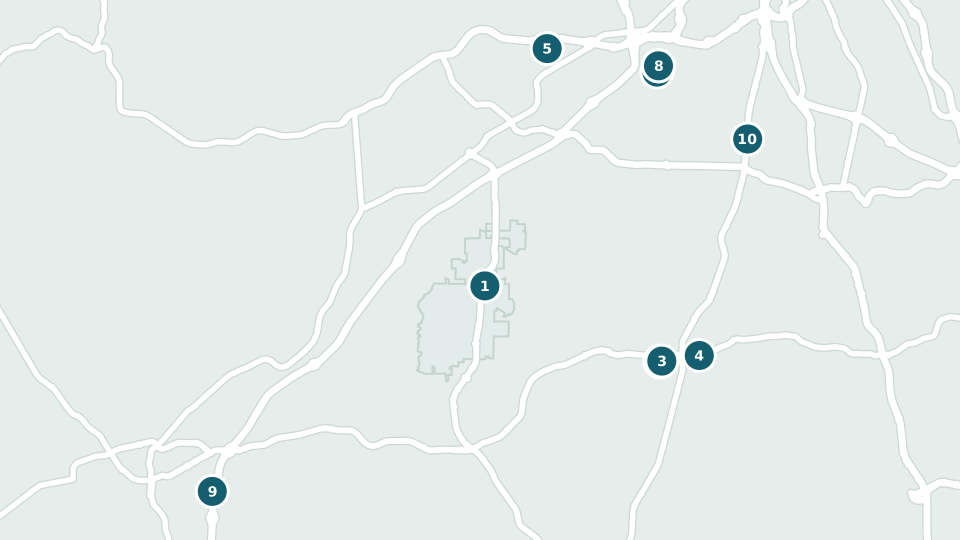
10 options near Tyrone, GA, nearest first. Compare services and locations, then call to check availability.
Call (833) 659-6966Ask about your optionsThis number connects to our central helpline, not directly to a listed facility.
Check which services are available for your needs.
Confirm payment options and any waiting time directly.
Ask what information the program needs from you.
If you are looking into drug rehab centers around Tyrone, it helps to know what to ask before your first appointment. A good starting point is to ask any program you contact how it begins care: most will schedule an intake or assessment where a counselor asks about your substance use, health history, and daily situation so they can recommend the right level of support. From there, you can ask what a typical week looks like, whether sessions are one-on-one, in groups, or both, and how family members fit into the process if you want them involved.
Practical questions matter too. Ask how long the program usually runs, what happens if you need care between appointments, and who you can call after hours. Since every person's needs differ, it is fair to ask how the program handles co-occurring mental health concerns or specific substances.
You do not need to have everything figured out before you call; the purpose of a first visit is for the program to learn about you and for you to decide whether it feels like the right fit. Taking that step in Tyrone or a nearby community is a reasonable, manageable way to begin.
Call (833) 659-6966
Most drug rehab centers organize treatment into stepped levels of care. Detox provides medical supervision while substances clear your body, residential programs have you live at the facility for round-the-clock support, and partial hospitalization offers full-day treatment while you sleep at home. Below that sit intensive outpatient programs, which meet several hours a day on multiple days per week, and standard outpatient care, which schedules a few sessions around work or family life.
Some centers also run sober living homes that bridge the gap between a residential stay and independent living.
Call (833) 659-6966Check which services each program reports offering.
Consider travel distance and whether care is in person or remote.
Ask the program directly about payment and coverage.
Confirm how to contact the program and what to expect.
Ask the intake coordinator what levels of care the center actually offers, since some facilities only run outpatient programs while others include detox and residential beds. Ask which insurance plans they accept and what a self-pay rate looks like. Ask whether they can prescribe medication for opioid or alcohol use disorder, because not every center offers it.
Ask what a typical daily schedule includes, how long the program runs, and whether they help arrange aftercare or a referral when you finish.
Across Georgia, people looking into drug rehab centers typically rely on a mix of payment methods to cover the cost of care. Private health insurance is one of the most common routes, since many plans include coverage for substance use treatment, including detox, inpatient programs, and outpatient counseling. Public options such as Medicaid may also be available to eligible residents, though the scope of covered services can vary.
Many facilities in the state offer sliding-scale fees based on income, which can make treatment more affordable for those without insurance. Self-pay, or paying out of pocket, remains an option for those who prefer not to use insurance or who lack coverage entirely. Before committing to any program, it's important to confirm what forms of payment a specific facility accepts and to verify insurance eligibility and benefits directly with the provider and your insurer.
Start with the kinds of care relevant to your needs.
Check each program’s listed services, location and contact details.
Contact a program to confirm availability, costs and the next step.
Start by matching the program to what you actually need: someone with a long history of relapse or an unstable home situation often does better starting in residential care, while a stable job and supportive family can make outpatient work. Check that the staff hold relevant credentials and that the program uses recognized approaches like cognitive behavioral therapy or medication-assisted treatment rather than vague promises. Ask for a clear written cost breakdown before you commit, including what insurance covers and what it does not.
Visit in person if you can, and pay attention to whether the facility feels clean, organized, and staffed by people who answer questions directly.
If you are looking into drug rehab centers around Tyrone, it helps to know what to ask before your first appointment.

If someone is in immediate danger, such as a suspected overdose, severe withdrawal, chest pain, difficulty breathing, or any threat of self-harm, call 911 right away rather than waiting to contact a rehab center. Tell the dispatcher exactly what happened, what substances were involved if you know, and whether the person is conscious. Emergency rooms can stabilize the medical crisis and are often the fastest route to an assessment that leads to treatment.
You can also call or text 988 for the Suicide and Crisis Lifeline any time you or someone you care about needs urgent support.
If you or someone else is in immediate danger, call 911 now.
Call (833) 659-69661139 Senoia Road, Tyrone, GA, 30290
Active
135 Bradford Square, Suite B, Fayetteville, GA, 30215
Active
105 Bradford Square, Suite A, Fayetteville, GA, 30215
Active
101 Devant Street, Suite 702, Fayetteville, GA, 30214
Active
5355 Hunter Road, Atlanta, GA, 30349
Active
5650 Old National Highway, Atlanta, GA, 30349
Active
5526 Old National Highway, Suites B and C, Atlanta, GA, 30349
Active
5526 Old National Highway, Suite B, Atlanta, GA, 30349
Active
931 Lower Fayetteville Road, Suite K, Newnan, GA, 30263
Active
6944 Highway 85, Suite F, Riverdale, GA, 30274
Active
The right level of care depends on how much support you need day to day. An assessment with a treatment professional is the usual way to figure this out; they will ask about your substance use, health, and home situation, and then recommend options ranging from regular outpatient visits to more structured programs. Calling a program and asking for an evaluation is a good first step.
Before your first appointment, ask what the assessment involves, what kinds of counseling the program offers, how long treatment typically lasts, and whether family can participate if you want that. It also helps to ask who you can contact between visits and what the program does if you need more support than it provides.
It depends on the level of care and your needs. Detox often takes under a week, residential programs commonly run 30 to 90 days, and outpatient care can stretch over several months of weekly sessions. A good program will assess you first and recommend a length based on your situation rather than a fixed number.
Not always. Many people attend intensive outpatient or standard outpatient programs in the evening or early morning so they can keep working. Residential treatment does require you to live at the facility, but the federal Family and Medical Leave Act may protect your job while you take time for treatment. It is worth asking an intake coordinator which schedules would fit your work situation.
Expect an intake assessment where a counselor or nurse asks about your substance use, medical history, and mental health. You will usually get a tour, have your belongings checked against facility rules, and be assigned a counselor or case manager. The first day is mostly paperwork, orientation, and getting settled, with your treatment plan built in the days that follow.