 National Rehab Helpline
8400 Abercorn Street, Savannah, GA, 31406
Active
- Outpatient
- Medicaid
- Medicare
- Private insurance
City
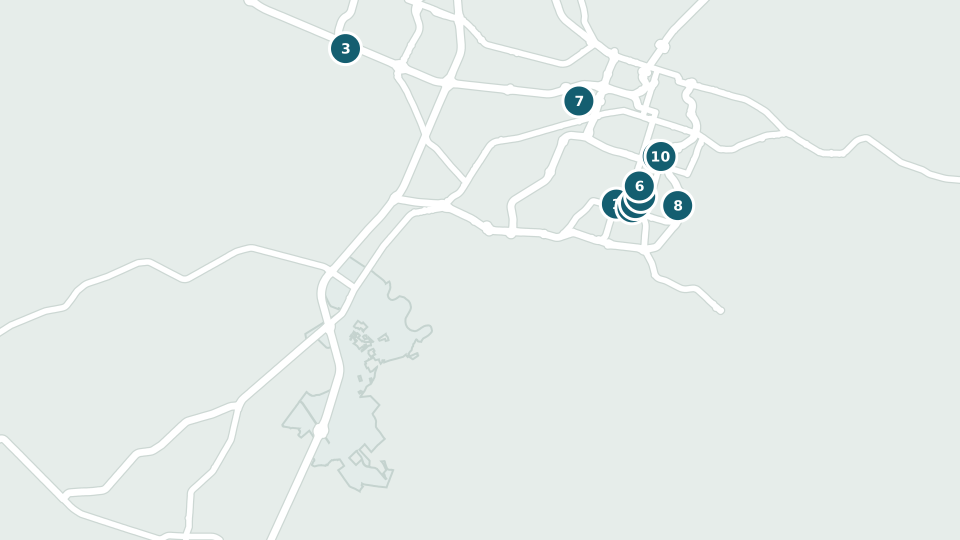
10 options near Richmond Hill, GA, nearest first. Compare services and locations, then call to check availability.
Call (833) 659-6966Ask about your optionsThis number connects to our central helpline, not directly to a listed facility.
Check which services are available for your needs.
Confirm payment options and any waiting time directly.
Ask what information the program needs from you.
If you are looking into drug rehab centers near Richmond Hill, it helps to know what questions to ask before your first visit. A good starting point is to ask the program what its intake process looks like, including what happens during the first appointment and who will be part of your care team. You can ask whether an assessment is done in person or over the phone, and how quickly an appointment can be scheduled once you reach out. Many people also want to know who provides counseling sessions, whether they are one-on-one, in a group, or both, and how family members can be included if that matters to you.
It is also fair to ask what kind of planning happens for ongoing care, including how a program decides what comes next after the first phase of treatment. If you need help with practical details, ask whether the program offers support for getting to and from appointments and how scheduling works around your job or family responsibilities. Some programs offer telehealth options, which may matter if travel or time away from home is a concern, so it is worth asking whether remote visits are available. You may want to confirm what information you will need to bring to a first visit, such as identification, insurance cards, or a list of current medications, so nothing slows down the intake process.
Every program handles these details a little differently. Programs serving the Richmond Hill area range from outpatient counseling providers to larger behavioral health organizations, and each one will have its own approach to assessments, appointment availability, and the services offered at its location. Calling ahead and asking direct questions about the intake process, visit format, and what support is available can help you find a program that fits your situation and feels workable for your life.
Call (833) 659-6966
Not every drug rehab center offers the same type of care, so it helps to understand the common categories before calling. At the most intensive end is inpatient rehab, where housing, meals, and treatment all happen in one place. A step down from that is a day treatment or partial hospitalization program, which is nearly as many hours of care but lets you return home each night.
Intensive outpatient care offers several sessions a week with more flexibility, and standard outpatient services offer the lightest schedule. Some people also begin with a period of supervised withdrawal management before moving into ongoing treatment. When you call a program, ask which of these levels they actually provide, since many facilities focus on just one or two.
Call (833) 659-6966Check which services each program reports offering.
Consider travel distance and whether care is in person or remote.
Ask the program directly about payment and coverage.
Confirm how to contact the program and what to expect.
Before committing to any rehab program, ask the same core questions of each one so you can compare answers. Start with the basics: what levels of care they provide, whether they have immediate openings, and what the admission process involves. Ask about treatment methods, whether medication is part of their approach, and how they handle co-occurring mental health conditions.
Get specifics on cost, insurance participation, and possible additional charges. Ask about visitation, phone access, and family involvement if those matter to you. It is also fair to ask what their aftercare and relapse support look like once the formal program ends.
Figuring out how to pay for addiction treatment is often one of the first concerns for people searching for drug rehab centers in Georgia, and fortunately there are several common ways costs are handled. For many, private insurance is the primary method, as employer-sponsored and marketplace plans frequently include behavioral health benefits. Georgia residents who qualify for public coverage, like Medicaid, may find that certain treatment services are included, though eligibility rules and covered services differ.
Some rehab programs also use a sliding-scale fee structure, adjusting what patients pay according to their financial situation, which helps lower the barrier to getting help. Those without insurance can always choose to self-pay. Because policies, eligibility, and accepted payment types change over time, contacting a facility ahead of time to confirm what they accept is strongly advised.
Start with the kinds of care relevant to your needs.
Check each program’s listed services, location and contact details.
Contact a program to confirm availability, costs and the next step.
When choosing between drug rehab centers near you, start with fit rather than convenience. Ask whether each program has experience treating the substance and pattern of use you are dealing with, since some centers specialize. Compare the intensity of care available and whether you can move between levels if your needs change.
Look at what a normal day involves: how much is group therapy, how much is individual counseling, and what other services are included. Ask about family involvement, relapse support, and what the program does to help you continue care after discharge. Get a clear answer on cost, insurance participation, and any extra charges.
A program that explains these details openly and gives you time to decide is showing you how it treats people.
If you are looking into drug rehab centers near Richmond Hill, it helps to know what questions to ask before your first visit.

Emergencies connected to drug use need fast action, so treat them as emergencies first and treatment questions second. Call 911 for any suspected overdose, severe withdrawal reaction, or situation where someone may harm themselves or others. Stay with the person until help arrives if it is safe to do so.
For non-medical crises, the 988 Suicide and Crisis Lifeline provides free, confidential support by phone or text, day or night. Once the person is safe and stable, you can take time to compare rehab centers and plan ongoing care.
If you or someone else is in immediate danger, call 911 now.
Call (833) 659-69668400 Abercorn Street, Savannah, GA, 31406
Active
7395 Hodgson Memorial, Savannah, GA, 31406
Active
600 DOT Barn Road, Bloomingdale, GA, 31302
Active
401 Mall Boulevard, Suite 101-D, Savannah, GA, 31406
Active
600 Commercial Court, Suite A, Savannah, GA, 31406
Active
6707 Forest Park Drive, Savannah, GA, 31406
Active
145 Southern Boulevard, Suite B, Savannah, GA, 31405
Active
1915 Eisenhower Drive, Savannah, GA, 31406
Active
601 East 66th Street, Savannah, GA, 31405
Active
835 East 65th Street, Suite 104, Savannah, GA, 31405
Active
It helps to ask how the intake process works, whether the first assessment happens in person or by phone, and who will be involved in your care. You can also ask what to bring, such as identification, insurance cards, or a list of medications, and how long the first visit usually takes so you can plan your day around it.
Yes, and it is a reasonable question to bring up early. Programs structure counseling differently, with some offering one-on-one sessions, group sessions, or a mix of both. Asking how sessions are scheduled, whether family can be involved, and whether telehealth visits are an option can help you decide whether a program fits your routine and comfort level.
Start with an honest picture of your situation: how often you use, whether you have tried to stop before, and what support you have at home. Then contact a few programs and ask for an assessment, which is how they match you to a level of care. You can also ask your primary care doctor for referrals. Comparing more than one program gives you a better sense of what fits.
Short programs may last about a month, longer residential stays often run two to three months, and outpatient treatment can continue for six months or more. The level of care matters too: inpatient programs are measured in weeks, while weekly counseling is measured in months. Progress is usually reviewed along the way rather than set in stone at admission. Ask programs how they handle extensions or step-downs if your needs change.
Cost depends on the level of care, the length of the program, and your insurance coverage, so the same program can cost two people very different amounts. The fastest way to a real number is to call with your insurance information in hand and ask for an estimate. Ask about charges beyond the base rate, such as medications, drug testing, or aftercare visits. Programs that will not give you a clear picture of costs before admission deserve extra scrutiny.