 National Rehab Helpline
4271 South Lee Street, Suite 101, Buford, GA, 30518
Active
- Outpatient
- Detox
- Medication-assisted treatment
- Medicaid
City
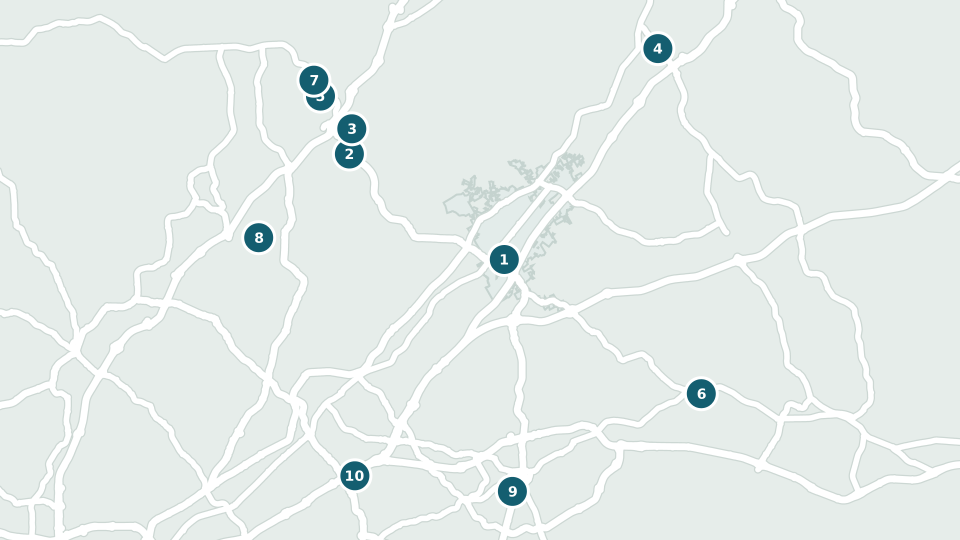
10 options near Buford, GA, nearest first. Compare services and locations, then call to check availability.
Call (833) 659-6966Ask about your optionsThis number connects to our central helpline, not directly to a listed facility.
Check which services are available for your needs.
Confirm payment options and any waiting time directly.
Ask what information the program needs from you.
If you are looking into drug rehab centers near Buford, the first conversation you have with a program can tell you a lot. Before your first visit, it helps to write down what you want to know so nothing slips your mind once you are there. You can ask how the program begins for a new person: whether there is an intake appointment, what happens during it, and who you will meet with.
You can also ask what a typical week looks like, how long the program usually runs, and what kinds of counseling or group sessions are part of it. If you have a job, school schedule, or family responsibilities, ask how the program's schedule fits around those, since some care happens during the day while other programs meet in the evenings. It is fair to ask who provides the treatment, what their training is, and whether the same people work with you over time.
You can also ask how the program decides when someone is ready to move to the next step, and what support exists after the main part of the program ends. There is no single right answer to these questions, but a program that answers them clearly and without pressure is giving you useful information to weigh. If something does not feel like a good fit, it is okay to keep looking.
The goal is to find care you can actually stick with.
Call (833) 659-6966
Drug rehab centers typically layer their services, and understanding those layers makes comparison easier. At the lighter end, standard outpatient care involves one or two therapy appointments per week. Stepping up, an intensive outpatient program packs roughly nine or more hours of treatment into multiple days, while a partial hospitalization program can run five days a week for much of the day.
Full residential or inpatient rehab has you staying on site, usually from a few weeks to ninety days, with housing, meals, and daily programming included. Detoxification services, when offered, provide medical supervision during withdrawal, sometimes followed directly by a residential stay. Medication-assisted treatment may run alongside any of these levels, pairing FDA-approved medications with behavioral therapy.
When you call a center, ask whether you would start at one level and move between levels as your needs change.
Call (833) 659-6966Check which services each program reports offering.
Consider travel distance and whether care is in person or remote.
Ask the program directly about payment and coverage.
Confirm how to contact the program and what to expect.
Before committing to a program, a phone call can surface the details that brochures leave out. Good questions include: Is detox available on site or through a partner, and is it medically supervised? What does a typical day look like for someone in the program?
Which therapies do you use, and is treatment tailored to each person or standardized? On the financial side, ask which insurers they are in-network with, whether they offer payment plans or sliding-scale fees, and what happens to your spot if insurance stops covering partway through. You should also ask about aftercare: what support exists after the formal program ends, and do they help with relapse prevention planning?
Practical logistics matter too, so ask about visitation rules, phone access, whether you can keep prescribed medications, and how they accommodate work or school obligations. Ending with 'What should I bring?' and 'When could I start?' keeps the conversation concrete.
Figuring out how to pay for addiction treatment is often one of the first concerns for people searching for drug rehab centers in Georgia, and fortunately there are several common ways costs are handled. For many, private insurance is the primary method, as employer-sponsored and marketplace plans frequently include behavioral health benefits. Georgia residents who qualify for public coverage, like Medicaid, may find that certain treatment services are included, though eligibility rules and covered services differ.
Some rehab programs also use a sliding-scale fee structure, adjusting what patients pay according to their financial situation, which helps lower the barrier to getting help. Those without insurance can always choose to self-pay. Because policies, eligibility, and accepted payment types change over time, contacting a facility ahead of time to confirm what they accept is strongly advised.
Comparing rehab options works best when you apply the same criteria to each one. Start with the match between your needs and their services: someone managing withdrawal needs medical detox, while someone with a stable home life might do well in outpatient care. Verify that the facility holds a current state license, and treat any accreditation from a recognized body as a plus.
Ask what a treatment plan looks like: individualized plans that adapt over time are preferable to identical packages for everyone. Check whether they treat co-occurring mental health conditions like depression or anxiety alongside addiction, since these often travel together. Weigh the practical factors of cost, insurance participation, location relative to your support network, and work or childcare flexibility.
Pay attention to how admission staff treat you on the phone; dismissive or high-pressure callers often reflect the culture behind them. Finally, ask about aftercare and relapse prevention, because treatment does not end at discharge.
If you are looking into drug rehab centers near Buford, the first conversation you have with a program can tell you a lot.

Emergency situations connected to drug use require fast action, and knowing the steps ahead of time helps. For any life-threatening event, including suspected overdose, uncontrolled vomiting with confusion, seizures, injuries, or any threat of self-harm, dial 911 immediately and tell the dispatcher exactly what substance was involved if you know it. Do not wait to see whether symptoms improve on their own.
For poisoning questions that are not immediately life-threatening, Poison Control at 1-800-222-1222 offers free, confidential guidance from specialists. For emotional crises, including suicidal thoughts or severe panic, the 988 Suicide and Crisis Lifeline provides support by call or text, day or night. Families in crisis can also reach out to these lines for guidance on getting a reluctant person into care.
After the immediate danger is handled, ask the hospital or crisis line staff for referrals to local drug rehab centers and assessment services.
If you or someone else is in immediate danger, call 911 now.
Call (833) 659-69664271 South Lee Street, Suite 101, Buford, GA, 30518
Active
1435 Haw Creek Circle East, Suite 403, Cumming, GA, 30041
Active
925 Sanders Road, Suite B, Cumming, GA, 30041
Active
3626 Old Oakwood Road, Oakwood, GA, 30566
Active
514 West Maple Street, Suite 1206, Cumming, GA, 30040
Active
85 Auburn Park Drive, Auburn, GA, 30011
Active
125 North Corners Parkway, Cumming, GA, 30040
Active
2725 Pine Grove Road, Cumming, GA, 30041
Active
175 Gwinnett Drive, Lawrenceville, GA, 30046
Active
3350 Breckinridge Boulevard, Suite 200, Duluth, GA, 30096
Active
Ask how the intake process works, what a typical schedule looks like, how long the program lasts, and what happens after you finish. You can also ask who will be working with you and what kind of support is available if something comes up between sessions. Taking notes during the call makes it easier to compare programs later.
No. A first visit or phone call is a chance to gather information, not a commitment. Ask your questions, notice how comfortable you feel with the answers, and take time to compare your options. A trustworthy program will not pressure you to sign up on the spot, and it is reasonable to visit or call more than one place before choosing.
Not necessarily, since many programs are built around work schedules. Intensive outpatient and standard outpatient programs hold sessions in the mornings, evenings, or on weekends specifically so people can keep working. Residential treatment does require living at the facility, so that option usually means taking leave, using vacation time, or in some cases invoking job-protected leave such as FMLA. Ask each program about its scheduling before you decide.
Days are usually structured from morning to evening with a set schedule. A common pattern includes waking at a consistent time, breakfast, a morning counseling group or educational session, lunch, afternoon individual or group therapy, free time for exercise or reflection, dinner, and an evening peer meeting or activity. Days may also include appointments with medical staff, life-skills sessions, or time for personal reflection. The predictability of the schedule is intentional, since structure supports early recovery.
Yes, returning to treatment after a relapse is common and does not mean rehab failed or that you are beyond help. Relapse is a recognized part of recovery for many people, and programs routinely admit people who have been through treatment before. A second or third stay can succeed where earlier attempts did not, especially if the program better matches your needs, treats underlying mental health issues, or uses approaches like medication-assisted treatment that were not tried previously. Tell any new program about your treatment history so they can adjust your plan.