 National Rehab Helpline
2815 Clearview Place, Atlanta, GA, 30340
Active
- Residential
- Medication-assisted treatment
City
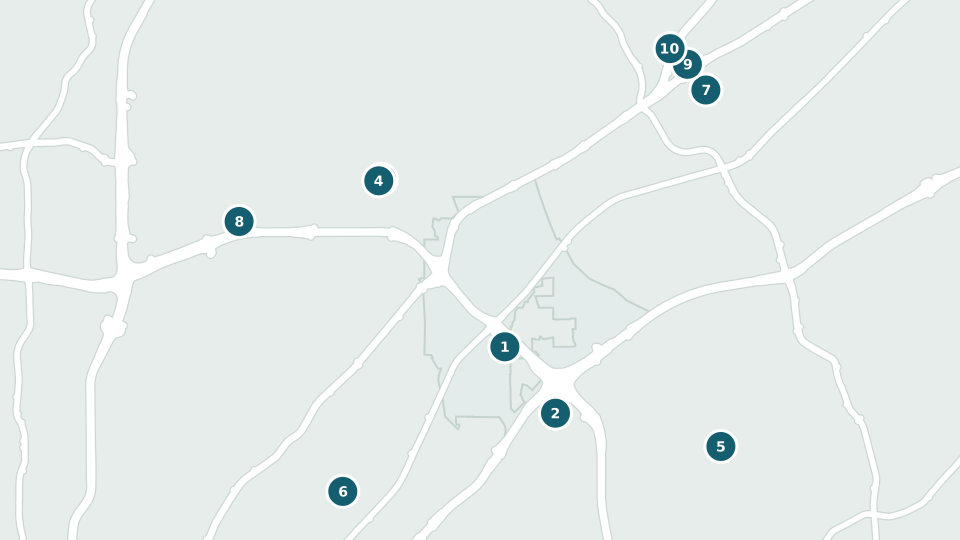
10 options near Doraville, GA, nearest first. Compare services and locations, then call to check availability.
Call (833) 659-6966Ask about your optionsThis number connects to our central helpline, not directly to a listed facility.
Check which services are available for your needs.
Confirm payment options and any waiting time directly.
Ask what information the program needs from you.
When you reach out to a drug rehab center near Doraville, you can expect an initial conversation that focuses on understanding your situation and how the program can help. A first visit or intake call typically covers your substance use history, your health, and what you want to get out of treatment. You can ask the program how their admissions process works, what a typical day looks like, and whether they offer the level of care you need, such as residential treatment, outpatient services, or counseling.
It is also fair to ask how families are involved, how long the program usually lasts, and what happens after the initial phase of care ends. Because the details for individual programs in this area are not available in our records right now, we cannot confirm specific services, costs, or what each location offers, so it is best to contact programs directly with your questions. Taking notes during these calls can help you compare options and choose the care that fits you best.
Call (833) 659-6966
Comparing programs starts with knowing the common formats. A medical detox handles the first days of stopping use, when withdrawal can be hardest, and it is usually followed by another level of care. Inpatient rehab combines housing with structured days of individual counseling, group therapy, and relapse-prevention work.
Outpatient and intensive outpatient programs cover similar therapies in fewer hours, which some people use as a starting point and others use as a step down from residential care. Many centers also build in family sessions, dual-diagnosis treatment for co-occurring mental health conditions, and alumni or continuing-care groups after discharge.
Call (833) 659-6966Check which services each program reports offering.
Consider travel distance and whether care is in person or remote.
Ask the program directly about payment and coverage.
Confirm how to contact the program and what to expect.
A few practical questions can tell you a lot about whether a program fits. Start with the basics: what levels of care are offered, what the admission process is, and how quickly someone can start. Ask about the daily structure and what a week of treatment actually looks like.
If you have a job, school, or caregiving duties, ask how scheduling works around them. If money is a factor, ask whether they accept your insurance, what the total cost covers, and whether there are extra charges. Finally, ask what happens after the program ends, since steady follow-up care is a major part of staying on track.
Figuring out how to pay for addiction treatment is often one of the first concerns for people searching for drug rehab centers in Georgia, and fortunately there are several common ways costs are handled. For many, private insurance is the primary method, as employer-sponsored and marketplace plans frequently include behavioral health benefits. Georgia residents who qualify for public coverage, like Medicaid, may find that certain treatment services are included, though eligibility rules and covered services differ.
Some rehab programs also use a sliding-scale fee structure, adjusting what patients pay according to their financial situation, which helps lower the barrier to getting help. Those without insurance can always choose to self-pay. Because policies, eligibility, and accepted payment types change over time, contacting a facility ahead of time to confirm what they accept is strongly advised.
Concrete comparisons beat impressions when choosing between programs. Make a short list of what each nearby center offers: levels of care, therapy types, average length of stay, family involvement, and whether they can treat co-occurring conditions. Ask each program the same set of questions and note the answers side by side.
Weigh logistics honestly, including commute time, cost after insurance, and rules about phones or visitors. Notice how each program treats you during the first call, because responsiveness and willingness to explain things often reflect how the whole experience will go.
When you reach out to a drug rehab center near Doraville, you can expect an initial conversation that focuses on understanding your situation and how the program can help.

Any overdose, loss of consciousness, or threat of self-harm is a reason to call 911 immediately, before contacting any treatment center. Emergency services can provide medical care on the scene and during transport, which a rehab program cannot do. For a mental health or suicidal crisis that is not a medical emergency, the 988 line offers free, confidential support by call or text, day or night.
Reaching out early for crisis help is always appropriate, and no treatment program will penalize you for putting safety first.
If you or someone else is in immediate danger, call 911 now.
Call (833) 659-69662815 Clearview Place, Atlanta, GA, 30340
Active
3155 Presidential Drive, Suite 104, Atlanta, GA, 30340
Active
4594 Barclay Drive, Atlanta, GA, 30338
Active
4598 Barclay Drive, Atlanta, GA, 30338
Active
4255 Chamblee Tucker Road, Atlanta, GA, 30340
Active
3807 Clairmont Road, Atlanta, GA, 30341
Active
3020 Holcomb Bridge Road, Norcross, GA, 30071
Active
53 Perimeter Center East, Suite 100, Atlanta, GA, 30346
Active
3240 Pointe Parkway NW, Suite 300, Peachtree Corners, GA, 30092
Active
6063 Peachtree Parkway, Suite 103-B, Peachtree Corners, GA, 30092
Active
Ask about the levels of care they offer, how the admissions process works, what a typical day involves, how long treatment usually lasts, and what support continues after the main program ends. You can also ask about family involvement and anything else that matters to your situation, such as transportation or scheduling needs. If a program cannot answer your questions clearly, that is useful information as you compare your choices.
No. Staff who handle admissions expect people to call with questions and incomplete information. You do not need to know what level of care you need or how treatment works before you reach out. Describing your situation honestly and asking what the program recommends is a normal first step, and you can contact more than one program before deciding.
The first days usually involve an intake assessment, where staff ask about your substance use, medical history, and mental health. If you need detox, that often comes first, with staff monitoring you and treating withdrawal symptoms. Once you are stable, treatment shifts to a regular schedule of counseling, group sessions, and planning for what comes next. The exact process varies by program, so it is reasonable to ask for a written overview before you arrive.
Many programs include family sessions, education for relatives, and scheduled visitation, especially in residential care. Family involvement can help the people close to you understand addiction as a health condition and learn how to support your recovery without enabling. Policies differ widely, though, from full family programs to limited visiting hours, so ask about this before choosing a program if family participation matters to you.
No. Medication-assisted treatment, which combines FDA-approved medications with counseling for opioid or alcohol use disorders, is offered by many programs but not all of them. Some centers focus on counseling alone, and availability can vary even between locations of the same organization. If this treatment is relevant to you, ask specifically which medications are prescribed, who prescribes them, and how long the program supports continued use.