 National Rehab Helpline
1830 Water Place, Suite 220, Atlanta, GA, 30339
Active
- Outpatient
- Medicaid
- Private insurance
- Self-pay
City
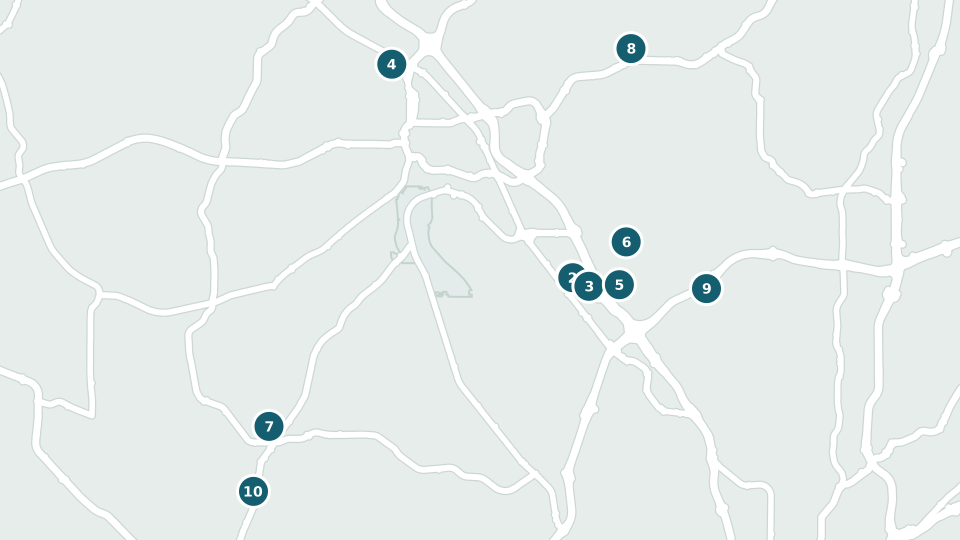
10 options near Fair Oaks, GA, nearest first. Compare services and locations, then call to check availability.
Call (833) 659-6966Ask about your optionsThis number connects to our central helpline, not directly to a listed facility.
Check which services are available for your needs.
Confirm payment options and any waiting time directly.
Ask what information the program needs from you.
When you contact a treatment program for the first time, it helps to know what questions to ask so you can find care that fits your situation. Any program you call should be able to explain what its first appointment looks like, whether it starts with an assessment or intake conversation, and who you will talk to. Ask about the types of treatment offered, such as counseling, outpatient visits, or longer-term residential care, and how the program decides which level of support is right for you.
You can also ask whether family members can take part, what a typical weekly schedule involves, and how the program supports people over time rather than only during the early weeks. If you are juggling work, school, childcare, or transportation, say so upfront and ask how the program handles those practical needs. There is no single right answer to these questions.
The goal is to get a clear picture of what each program offers so you can compare your options near Fair Oaks and choose the one where you feel understood and comfortable asking for help.
Call (833) 659-6966
Every level of drug and alcohol treatment serves a different need, so it helps to know what each one actually involves. Residential care means sleeping at the center and following a full daily schedule of therapy and group sessions. Partial hospitalization is a step down, with full days of treatment several days a week before you return home in the evening.
Standard outpatient care is typically one or two sessions per week and works best when your home situation is stable. Sober living homes are another option: they are not treatment itself, but they offer a substance-free place to stay while you attend a program.
Call (833) 659-6966Check which services each program reports offering.
Consider travel distance and whether care is in person or remote.
Ask the program directly about payment and coverage.
Confirm how to contact the program and what to expect.
Your first conversation with a treatment center is your chance to screen them as much as they screen you. Ask who provides the clinical care and what the staff-to-client ratio is. Ask whether the length of stay is fixed or adjusted to your progress.
Find out what a withdrawal or detox period involves, if that applies, and whether it happens at the same facility or somewhere else. It is also fair to ask about visitation rules, how they handle a return to use during treatment, and what support exists for families. Closing with cost and insurance questions early can save you from falling for a program you cannot afford.
When exploring drug rehab centers throughout Georgia, prospective patients and their families will find that paying for treatment usually comes down to a few well-established approaches. A large share of people use private insurance to help offset the expense of detoxification, residential care, therapy sessions, and aftercare. Public programs may play a role as well; residents who meet income and other requirements might access coverage through options like Medicaid, but details vary case by case.
Sliding-scale fees are another practical route, allowing facilities to charge based on what someone can reasonably afford. Paying directly out of pocket is also possible for individuals who want privacy or don't have coverage. Whichever path seems best, it's wise to verify coverage details and confirm payment arrangements with any facility before starting a program, as eligibility and accepted payments differ from one provider to another.
A good fit usually comes down to a few concrete criteria. Check which levels of care a center provides, since a place that only offers outpatient sessions may not be right if you need 24-hour support, and vice versa. Look at the therapies offered and whether they address mental health alongside substance use.
Ask what a typical stay or schedule involves and how progress is reviewed. Compare out-of-pocket costs across programs and confirm insurance acceptance in writing. The distance from home matters as well, since staying near supportive family can help, while some people do better with more distance from their usual environment.
When you contact a treatment program for the first time, it helps to know what questions to ask so you can find care that fits your situation.

When a situation involves overdose, serious injury, or any risk of harm, calling 911 is the fastest way to get medical help, and many states have Good Samaritan protections that encourage people to call without fear of certain drug-related penalties. Do not try to transport someone in a medical emergency yourself when responders can arrive faster. For urgent mental health or suicide-related crises, call or text 988 to speak with a trained counselor any time.
Keep these numbers saved in your phone before you need them, and if you are unsure whether a situation is emergent, treat it as one.
If you or someone else is in immediate danger, call 911 now.
Call (833) 659-69661830 Water Place, Suite 220, Atlanta, GA, 30339
Active
1820 Water Place SE, Suite 250, Atlanta, GA, 30339
Active
1995 North Park Place, Suite 505, Atlanta, GA, 30339
Active
1507 Church Street Extension, Marietta, GA, 30060
Active
1950 Spectrum Circle SE, Suite 200, Marietta, GA, 30067
Active
1295 Terrell Mill Road, Suite 104, Marietta, GA, 30067
Active
1790 Mulkey Road, Suite 3-A, Austell, GA, 30106
Active
3115 Sewell Mill Road, Suite 204, Marietta, GA, 30062
Active
6425 Powers Ferry Road, Suite 300, Atlanta, GA, 30339
Active
4760 Austell Road, Suite 1, Austell, GA, 30106
Active
Ask what happens at a first visit, whether treatment starts with an assessment, what kinds of counseling or programs are offered, and how the program decides what level of care fits your needs. It is also fair to ask about visit schedules, family involvement, and what support continues after the early stage of treatment.
No. Many people start with a call or a first appointment and let the program's assessment guide the conversation. Staff can usually walk you through the options they offer, and you can ask questions before committing to anything.
Not necessarily. Outpatient and intensive outpatient programs are built around evening or daytime sessions so that many people keep working while in treatment. Residential programs require you to live at the facility for a set period, which usually means taking time away. If you are unsure which you need, describing your daily obligations to a program during the first call can help you figure out what fits your schedule.
Many do, through what is called dual-diagnosis or co-occurring disorder treatment, which addresses conditions like depression, anxiety, or trauma alongside substance use. Treating both at once is often more effective than treating one and waiting on the other. Not every program has this capability, so if mental health is part of your situation, ask directly whether they can treat co-occurring conditions and who provides that care.
Most programs provide a packing list, and common items include comfortable clothes, identification, insurance information, and any current medications in their original bottles. Facilities typically restrict certain items, such as anything containing alcohol, non-prescribed substances, and sometimes personal electronics. Reading the list carefully and following it closely makes check-in smoother, and when in doubt, call the admissions office and ask before you pack it.