 National Rehab Helpline
2160 Fountain Drive, Snellville, GA, 30078
Active
- Hospital inpatient
- Detox
- Medication-assisted treatment
- Medicaid
City
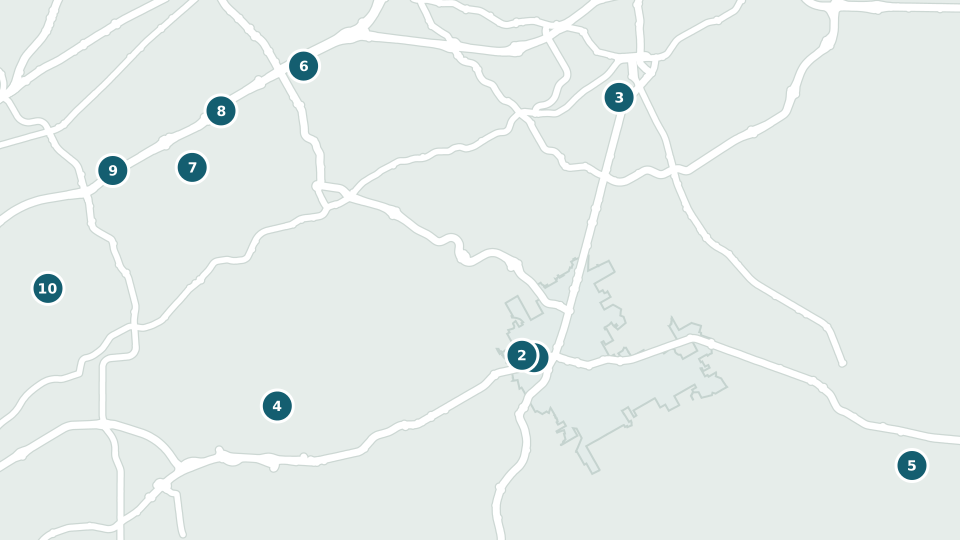
10 options near Snellville, GA, nearest first. Compare services and locations, then call to check availability.
Call (833) 659-6966Ask about your optionsThis number connects to our central helpline, not directly to a listed facility.
Check which services are available for your needs.
Confirm payment options and any waiting time directly.
Ask what information the program needs from you.
When you reach out to a drug rehab center near Snellville, it helps to know what a first contact usually involves. Most programs begin with a phone call or a simple intake conversation where you describe what is going on and what you are hoping to change. From there, staff typically arrange an assessment so they can understand your situation, including your substance use history, any mental health concerns, and your day-to-day needs. You can ask questions at every step, and it is fair to expect clear answers before you commit to anything.
Some useful questions to ask a program include: What does your assessment cover? What types of counseling do you offer, such as individual sessions, group therapy, or family support? Do you treat mental health alongside substance use, or refer elsewhere for that? How long do programs usually last, and what happens after the main phase ends? What does a typical week look like for someone in your care? You can also ask about visiting rules, how families stay involved, and who to call if you have concerns between appointments.
Logistics matter too. Ask whether the program accepts your insurance or offers other payment options, what hours appointments are available, and whether transportation is a barrier the program can help with. If you work or care for family members, ask about evening or weekend options. A good program will walk you through these details without pressure and will give you time to decide. If something does not feel like the right fit, it is okay to keep looking. The goal of a first visit is for you to leave with a clearer picture of your options and a plan you feel comfortable with.
Call (833) 659-6966
Treatment programs vary in intensity, and understanding the main types helps you compare what is available near you. Detox programs provide short-term medical oversight while a drug leaves your system, while inpatient or residential rehab has you live at the facility for a set period of care. Outpatient programs let you live at home and attend scheduled sessions, and intensive outpatient programs offer more weekly hours for people who need structure without full-time residence.
Some centers also provide medication-assisted treatment, which combines approved medications with counseling, or aftercare planning that continues once a formal program ends.
Call (833) 659-6966Check which services each program reports offering.
Consider travel distance and whether care is in person or remote.
Ask the program directly about payment and coverage.
Confirm how to contact the program and what to expect.
Before your first call, write down what you want to know so nothing gets lost. Useful questions include: What levels of care does the program offer? What does a typical daily schedule look like?
How long do most people stay? What therapies are used? Is medication-assisted treatment available if it applies to you?
How does the program handle co-occurring mental health conditions like depression or anxiety? What does the program cost, and which insurance plans does it accept? What happens after discharge, and is there an aftercare or alumni plan?
When exploring drug rehab centers throughout Georgia, prospective patients and their families will find that paying for treatment usually comes down to a few well-established approaches. A large share of people use private insurance to help offset the expense of detoxification, residential care, therapy sessions, and aftercare. Public programs may play a role as well; residents who meet income and other requirements might access coverage through options like Medicaid, but details vary case by case.
Sliding-scale fees are another practical route, allowing facilities to charge based on what someone can reasonably afford. Paying directly out of pocket is also possible for individuals who want privacy or don't have coverage. Whichever path seems best, it's wise to verify coverage details and confirm payment arrangements with any facility before starting a program, as eligibility and accepted payments differ from one provider to another.
When you compare rehab centers nearby, look first at whether a program offers the level of care you actually need, such as detox support, residential treatment, or outpatient services. Next, consider the treatment approaches used, including individual counseling, group therapy, family involvement, and medication-assisted treatment if relevant. Practical factors matter too: distance from home, whether your insurance is accepted, total cost after any coverage, and whether family can visit or take part in sessions.
A program that clearly explains its admissions process and answers your questions without pressure is usually easier to work with than one that pushes you to decide on the spot.
When you reach out to a drug rehab center near Snellville, it helps to know what a first contact usually involves.

If someone is in immediate danger, such as an overdose, a medical emergency, or a situation where they might harm themselves or others, call 911 right away. If you find someone unresponsive or with severe symptoms, do not wait to see whether treatment alone can wait; emergency responders can start help on the way. You can also reach the national mental health and suicide crisis line by calling or texting 988, which connects you to trained crisis counselors around the clock.
If you are with someone during a suspected overdose, call 911 rather than attempting to manage it alone.
If you or someone else is in immediate danger, call 911 now.
Call (833) 659-69662160 Fountain Drive, Snellville, GA, 30078
Active
2106 McGee Road, Snellville, GA, 30078
Active
175 Gwinnett Drive, Lawrenceville, GA, 30046
Active
5385 Five Forks Trickum Road, Suite F, Stone Mountain, GA, 30087
Active
3543 Highway 81, Suite 201, Loganville, GA, 30052
Active
3350 Breckinridge Boulevard, Suite 200, Duluth, GA, 30096
Active
5030 Georgia Belle Court, Suite 2036, Norcross, GA, 30093
Active
1854 Shackelford Court, Suite 400, Norcross, GA, 30093
Active
5750 Brook Hollow Parkway, Suite 203, Norcross, GA, 30071
Active
4255 Chamblee Tucker Road, Atlanta, GA, 30340
Active
Ask what the assessment covers, what kinds of counseling are offered, whether mental health care is included, how long the program lasts, and what support exists after the main program ends. You can also ask about insurance, payment options, appointment hours, and who to contact with questions between visits. A clear, unhurried answer to each of these is a good sign.
No. A first visit or intake call is about gathering information. You should leave with a clearer sense of what the program offers, what a typical schedule looks like, and what the next step would be. If the fit does not feel right, you can compare other options before choosing. Take the time you need to ask follow-up questions.
There is no single timeline, because the right length depends on the level of care, the substance involved, and your progress. Detox often lasts a few days to a week, residential programs commonly run 30 to 90 days, and outpatient care can continue for months. Longer and more structured programs tend to give people more time to practice new habits, but the best fit is one you can realistically start and finish.
Many rehab centers accept private insurance, and coverage for substance use treatment is included in most health plans sold under current law. What is covered varies, though, so call your insurer and ask which levels of care are covered, what your out-of-pocket costs would be, and whether a specific program is in network. Get the answers in writing if you can, and ask the treatment center's admissions staff to verify your benefits directly with the insurer.
Inpatient rehab means you live at the treatment center full time for the duration of the program, with 24-hour support and a structured daily schedule. Outpatient rehab means you live at home and travel to the facility for scheduled sessions, which can range from a few hours a week to nearly full-time hours in an intensive program. Inpatient care offers more support and separation from daily triggers, while outpatient care lets you keep working or caring for family.