 National Rehab Helpline

NewBridge Services Inc — 1069 Ringwood Avenue, Suite 202
1.9 mi, Haskell1069 Ringwood Avenue, Suite 202, Haskell, NJ, 07420
Active
- Day treatment
- Medication-assisted treatment
- Medicaid
- Medicare
City
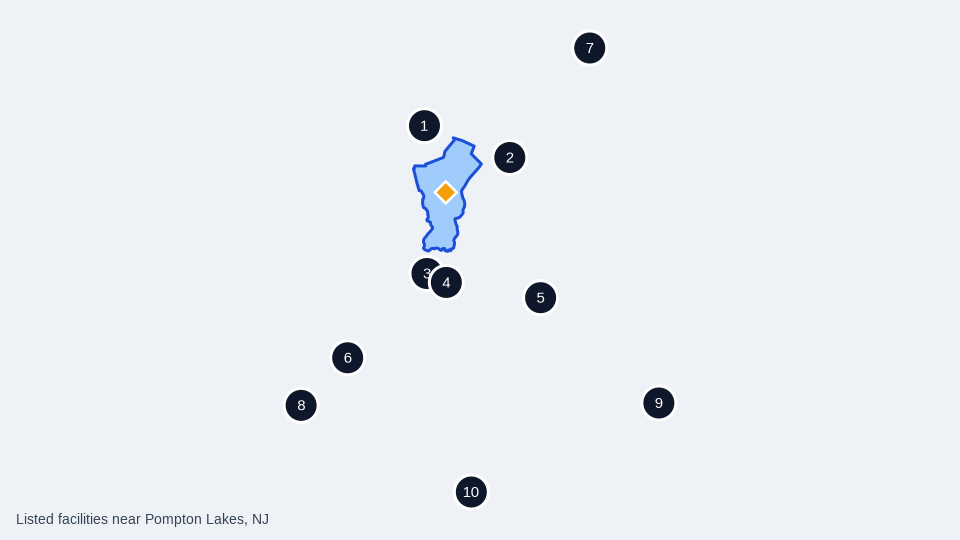
No listed facilities are in Pompton Lakes. The nearest listed facility is 1.9 miles from Pompton Lakes. Compare the facilities near Pompton Lakes below; distances are straight-line estimates.
This number connects to our central helpline, not directly to a listed facility.
When you contact a drug rehab center, ask what happens during the first appointment. You may want to know whether a program begins with an assessment, what kinds of counseling or therapies are offered, and what the typical schedule looks like. Some centers may offer individual or group sessions.
Call ahead to confirm which services are available, whether you need a referral, and what to bring to your first visit.

Most drug rehab centers organize treatment into levels of care, and knowing the sequence helps you match a program to your situation. Outpatient counseling usually means scheduled therapy sessions while you keep living at home, which works best when your use is less severe or you have strong support around you. Intensive outpatient programs (IOP) add more weekly hours, often with group therapy several days a week, so you can still work or care for family while getting structured treatment.
Partial hospitalization programs (PHP) meet most weekdays for several hours each day and are a step down from full-time care. Residential treatment means you live at the facility for a set period, which removes you from daily triggers and gives round-the-clock structure. Some programs also offer medication-assisted treatment (MAT), such as methadone, buprenorphine, or naltrexone, combined with counseling.
Ask each program which levels it provides in-house and where it refers people for the ones it does not.
A first call to a rehab center is the right time to gather facts, and specific questions get better answers than general ones. Start with treatment basics: What levels of care do you offer directly, and how long does each last? Ask whether they provide medication-assisted treatment and, if so, which medications.
Clarify money matters early by asking what insurance plans they accept, what a private-pay rate covers, and whether there are extra charges for services not in the quoted price. Ask about the daily schedule, the ratio of staff to clients, and the credentials of the people who would be treating you. It is also fair to ask how they handle a person who relapses during treatment and whether family members can participate in therapy or visit.
Finally, ask how soon an opening exists and what the intake process involves, including any assessment required before admission.
Payment for addiction treatment at drug rehab centers throughout New Jersey can be handled through several common routes. Private insurance plans frequently include coverage for substance use disorder services, so checking your policy's benefits is a key first step. Publicly supported coverage, such as Medicaid or state-funded grants, may be accessible for qualifying residents.
Many centers also provide sliding-scale fees, adjusting costs according to a person's financial situation, and self-pay is an option. It is essential to contact each facility directly to confirm which payment options they accept.
Choosing among nearby drug rehab centers comes down to fit rather than distance alone. First check whether a program offers the level of care you need right now; a center that only does outpatient counseling will not suit someone who needs medical detox. Confirm that the program is licensed to operate in its state and ask whether it holds any additional accreditations, since these indicate that outside bodies have reviewed its standards.
Look at the treatment methods offered: programs using approaches like cognitive behavioral therapy, contingency management, or medication-assisted treatment have substantial research behind them. Consider logistics honestly, including cost after insurance, commute time for outpatient care, and whether the facility allows the family involvement you want. Ask about the ratio of clinical staff to clients, because very large groups with little individual attention rarely serve people well.
Length of stay matters too, since longer engagement is generally associated with better results. Visiting in person, if possible, lets you judge cleanliness, atmosphere, and how staff interact with current clients.
When you contact a drug rehab center, ask what happens during the first appointment.

If someone is in immediate physical danger, such as an overdose, severe withdrawal, chest pain, difficulty breathing, or thoughts of suicide, call 911 right away. Emergency medical services can stabilize the situation regardless of insurance status or immigration status. If the danger involves a drug overdose, calling 911 is still the correct first step, and many states have Good Samaritan laws that protect callers from certain drug-related charges.
For a mental health or suicidal crisis, you can also call or text 988, the Suicide and Crisis Lifeline, which connects you to trained counselors around the clock. If you are helping someone else, stay with them, keep them awake and breathing if possible, and gather any pill bottles or drug packaging to show responders. Once the emergency has passed, a hospital social worker or case manager can usually point you toward rehab centers and treatment programs that accept new patients.
If you or someone else is in immediate danger, call 911 now.
1069 Ringwood Avenue, Suite 202, Haskell, NJ, 07420
Active
195 Ramapo Valley Road, Oakland, NJ, 07436
Active
640 Newark Pompton Turnpike, Pompton Plains, NJ, 07444
Active
465 Route 23 South, Pompton Plains, NJ, 07444
Active
1022 Hamburg Turnpike, Wayne, NJ, 07470
Active
53 Indian Lane East, Towaco, NJ, 07082
Active
1071 Ramapo Valley Road, Mahwah, NJ, 07430
Active
390 Main Road, Montville, NJ, 07045
Active
111 Washington Street, Suites B1 and B2, Paterson, NJ, 07505
Active
285 Passaic Avenue, 2nd floor, Fairfield, NJ, 07004
Active
These lists use only what the 10 active facilities listed for Pompton Lakes report to SAMHSA's FindTreatment.gov. No facility pays to be included or can ask to be moved. Reporting more options is not a measure of quality, outcomes or suitability for any person. A missing option means the facility did not report it to the source, not that it is not offered. Call the facility to confirm everything before relying on it.
How this list is made: each facility scores one point for each of these 5 levels of care (settings) it reports to SAMHSA's FindTreatment.gov (Residential (24-hour); Outpatient; Intensive outpatient; Partial hospitalization / day treatment; Hospital inpatient). A facility needs at least 3 to appear. Facilities are shown from the highest count to the lowest; facilities with the same count are in alphabetical order, which has no other meaning. Up to 10 are shown.
How this list is made: each facility scores one point for each of these 7 payment and cost-assistance options it reports to SAMHSA's FindTreatment.gov (Medicaid; Medicare; Private health insurance; Military insurance (TRICARE); Cash or self-payment; Sliding fee scale; Payment assistance). A facility needs at least 4 to appear. Facilities are shown from the highest count to the lowest; facilities with the same count are in alphabetical order, which has no other meaning. Up to 10 are shown.
How this list is made: each facility scores one point for each of these 4 medications used in treatment it reports to SAMHSA's FindTreatment.gov (Buprenorphine; Methadone; Naltrexone; Medication for alcohol use disorder). A facility needs at least 2 to appear. Facilities are shown from the highest count to the lowest; facilities with the same count are in alphabetical order, which has no other meaning. Up to 10 are shown.
How this list is made: each facility scores one point for each of these 12 age groups and client groups accepted it reports to SAMHSA's FindTreatment.gov (Adolescents; Young adults; Adults; Seniors; Pregnant or postpartum women; Adult women; Adult men; Veterans; Active duty military; Criminal justice clients; Clients who have experienced trauma; Co-occurring mental and substance use disorders). A facility needs at least 5 to appear. Facilities are shown from the highest count to the lowest; facilities with the same count are in alphabetical order, which has no other meaning. Up to 10 are shown.
Look for a program that offers the type of care you need, such as outpatient counseling or more intensive treatment. Ask about their approach to therapy, staff qualifications, and whether they offer support for co-occurring mental health conditions. It also helps to confirm that the center is licensed and accepts your insurance or offers payment options.
During intake, you will likely meet with a counselor or clinician who will ask about your substance use history, mental health, and any medical needs. This information helps create a treatment plan tailored to you. You may also complete paperwork and discuss program rules, scheduling, and fees. Call the center ahead of time to learn what to expect.
Length of stay varies with the level of care and your individual needs. Detox often lasts three to ten days, while residential programs commonly run from thirty to ninety days. Outpatient programs can extend over several months because you attend sessions a few times each week while living at home. Many people continue with some form of counseling or support group well beyond the initial program.
Many do, and insurance often covers a substantial portion of treatment, but the details depend on your specific plan and the facility. Under current law, most health plans must cover mental health and substance use treatment at least partially. Before enrolling, ask the center to verify your benefits in writing, including your deductible, copays, and how many days are covered. Also confirm whether the facility is in-network or out-of-network for your plan, since that difference can significantly change your costs.
Inpatient or residential rehab means living at the treatment facility full-time, usually for several weeks, with around-the-clock care and daily programming. Outpatient rehab means living at home while attending scheduled treatment sessions, which can range from a few hours a week in standard outpatient care to nearly full days in a partial hospitalization program. Inpatient offers more structure and removes you from daily triggers, while outpatient lets you keep working and caring for family. The right choice depends on how severe the problem is, how stable your home environment is, and what you can practically manage.
Last updated