 National Rehab Helpline
A Brighter Start Health and Wellness
1.3 mi, New Bern1414 McCarthy Boulevard, New Bern, NC, 28562
Active
- Day treatment
- Medication-assisted treatment
- Medicaid
- Medicare
City
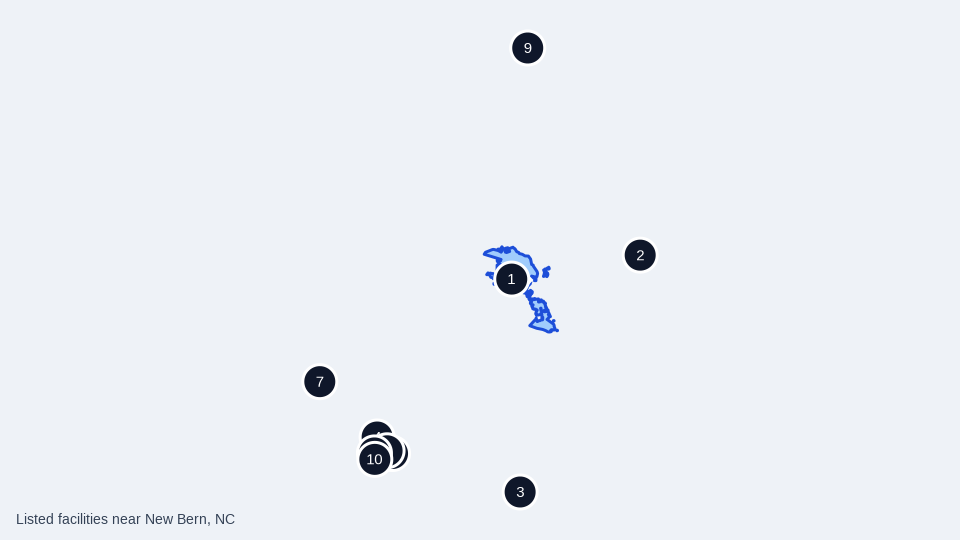
10 options near New Bern, NC, nearest first. Compare services and locations, then call to check availability.
This number connects to our central helpline, not directly to a listed facility.
When you reach out to a drug rehab center in the New Bern area, it helps to know what a first contact usually covers. Most programs begin with a phone call or an intake appointment where a counselor asks about your substance use, your health history, and what support you have at home. You can use that first conversation to ask questions of your own: What levels of care does the program offer, and how do they decide which one fits you?
Will you meet with a counselor one-on-one, in a group, or both? What does a typical week look like, including how many hours of treatment and whether evening or weekend sessions exist for people who work or care for family? It is also fair to ask how the program handles privacy, what happens if you miss an appointment, and whether family members can take part in your care.
You do not need to commit to anything on the first call. A good program will explain its process plainly, let you ask anything on your mind, and give you a clear sense of what the next step would be if you choose to move forward.

Every level of drug and alcohol treatment serves a different need, so it helps to know what each one actually involves. Residential care means sleeping at the center and following a full daily schedule of therapy and group sessions. Partial hospitalization is a step down, with full days of treatment several days a week before you return home in the evening.
Standard outpatient care is typically one or two sessions per week and works best when your home situation is stable. Sober living homes are another option: they are not treatment itself, but they offer a substance-free place to stay while you attend a program.
Your first conversation with a treatment center is your chance to screen them as much as they screen you. Ask who provides the clinical care and what the staff-to-client ratio is. Ask whether the length of stay is fixed or adjusted to your progress.
Find out what a withdrawal or detox period involves, if that applies, and whether it happens at the same facility or somewhere else. It is also fair to ask about visitation rules, how they handle a return to use during treatment, and what support exists for families. Closing with cost and insurance questions early can save you from falling for a program you cannot afford.
Paying for addiction treatment in North Carolina usually involves several possible routes, and most drug rehab centers work with more than one form of payment. Private insurance is a common starting point; many commercial plans include coverage for substance use disorder treatment, though the level of coverage, network requirements, and prior authorization rules differ significantly between policies. Residents who meet certain income and eligibility requirements may instead use public programs like Medicaid, but confirming eligibility and accepted coverage with both the state program and the facility is an important step.
Beyond insurance, sliding-scale fees are frequently offered, adjusting the cost of treatment to what a person can realistically afford, and straightforward self-pay arrangements let individuals fund their care directly when other options are not available.
A good fit usually comes down to a few concrete criteria. Check which levels of care a center provides, since a place that only offers outpatient sessions may not be right if you need 24-hour support, and vice versa. Look at the therapies offered and whether they address mental health alongside substance use.
Ask what a typical stay or schedule involves and how progress is reviewed. Compare out-of-pocket costs across programs and confirm insurance acceptance in writing. The distance from home matters as well, since staying near supportive family can help, while some people do better with more distance from their usual environment.
When you reach out to a drug rehab center in the New Bern area, it helps to know what a first contact usually covers.

When a situation involves overdose, serious injury, or any risk of harm, calling 911 is the fastest way to get medical help, and many states have Good Samaritan protections that encourage people to call without fear of certain drug-related penalties. Do not try to transport someone in a medical emergency yourself when responders can arrive faster. For urgent mental health or suicide-related crises, call or text 988 to speak with a trained counselor any time.
Keep these numbers saved in your phone before you need them, and if you are unsure whether a situation is emergent, treat it as one.
If you or someone else is in immediate danger, call 911 now.
1414 McCarthy Boulevard, New Bern, NC, 28562
Active
13808 NC Highway 55, 2nd Floor, Bayboro, NC, 28515
Active
1150 Cedar Point Boulevard, Swansboro, NC, 28584
Active
200 Tarpon Trail, Jacksonville, NC, 28546
Active
291 Huff Drive, Jacksonville, NC, 28540
Active
231 Memorial Drive, Jacksonville, NC, 28546
Active
100 North Wilmington Street, Richlands, NC, 28574
Active
2445 Onslow Drive, Jacksonville, NC, 28540
Active
216 Stewart Parkway, Washington, NC, 27889
Active
1007 Hargett Street, Suite 3, Jacksonville, NC, 28540
Active
These lists use only what the 10 active facilities listed for New Bern report to SAMHSA's FindTreatment.gov. No facility pays to be included or can ask to be moved. Reporting more options is not a measure of quality, outcomes or suitability for any person. A missing option means the facility did not report it to the source, not that it is not offered. Call the facility to confirm everything before relying on it.
How this list is made: each facility scores one point for each of these 5 levels of care (settings) it reports to SAMHSA's FindTreatment.gov (Residential (24-hour); Outpatient; Intensive outpatient; Partial hospitalization / day treatment; Hospital inpatient). A facility needs at least 3 to appear. Facilities are shown from the highest count to the lowest; facilities with the same count are in alphabetical order, which has no other meaning. Up to 10 are shown.
How this list is made: each facility scores one point for each of these 7 payment and cost-assistance options it reports to SAMHSA's FindTreatment.gov (Medicaid; Medicare; Private health insurance; Military insurance (TRICARE); Cash or self-payment; Sliding fee scale; Payment assistance). A facility needs at least 4 to appear. Facilities are shown from the highest count to the lowest; facilities with the same count are in alphabetical order, which has no other meaning. Up to 10 are shown.
How this list is made: each facility scores one point for each of these 4 medications used in treatment it reports to SAMHSA's FindTreatment.gov (Buprenorphine; Methadone; Naltrexone; Medication for alcohol use disorder). A facility needs at least 2 to appear. Facilities are shown from the highest count to the lowest; facilities with the same count are in alphabetical order, which has no other meaning. Up to 10 are shown.
How this list is made: each facility scores one point for each of these 12 age groups and client groups accepted it reports to SAMHSA's FindTreatment.gov (Adolescents; Young adults; Adults; Seniors; Pregnant or postpartum women; Adult women; Adult men; Veterans; Active duty military; Criminal justice clients; Clients who have experienced trauma; Co-occurring mental and substance use disorders). A facility needs at least 5 to appear. Facilities are shown from the highest count to the lowest; facilities with the same count are in alphabetical order, which has no other meaning. Up to 10 are shown.
Ask what levels of care they provide, how they assess new clients, what a weekly schedule looks like, and how they protect your privacy. It also helps to ask whether they offer sessions at times that fit your work or family responsibilities, and what support is available for family members.
No. A first contact is usually a chance to ask questions and learn how the program works. Staff should explain the intake process and what the next step would look like, and you can take time to decide before committing to anything.
Not necessarily. Outpatient and intensive outpatient programs are built around evening or daytime sessions so that many people keep working while in treatment. Residential programs require you to live at the facility for a set period, which usually means taking time away. If you are unsure which you need, describing your daily obligations to a program during the first call can help you figure out what fits your schedule.
Many do, through what is called dual-diagnosis or co-occurring disorder treatment, which addresses conditions like depression, anxiety, or trauma alongside substance use. Treating both at once is often more effective than treating one and waiting on the other. Not every program has this capability, so if mental health is part of your situation, ask directly whether they can treat co-occurring conditions and who provides that care.
Most programs provide a packing list, and common items include comfortable clothes, identification, insurance information, and any current medications in their original bottles. Facilities typically restrict certain items, such as anything containing alcohol, non-prescribed substances, and sometimes personal electronics. Reading the list carefully and following it closely makes check-in smoother, and when in doubt, call the admissions office and ask before you pack it.
Last updated