 National Rehab Helpline
2455 Wooddale Boulevard, Baton Rouge, LA, 70805
Active
- Residential
- Detox
- Medication-assisted treatment
- Medicaid
City
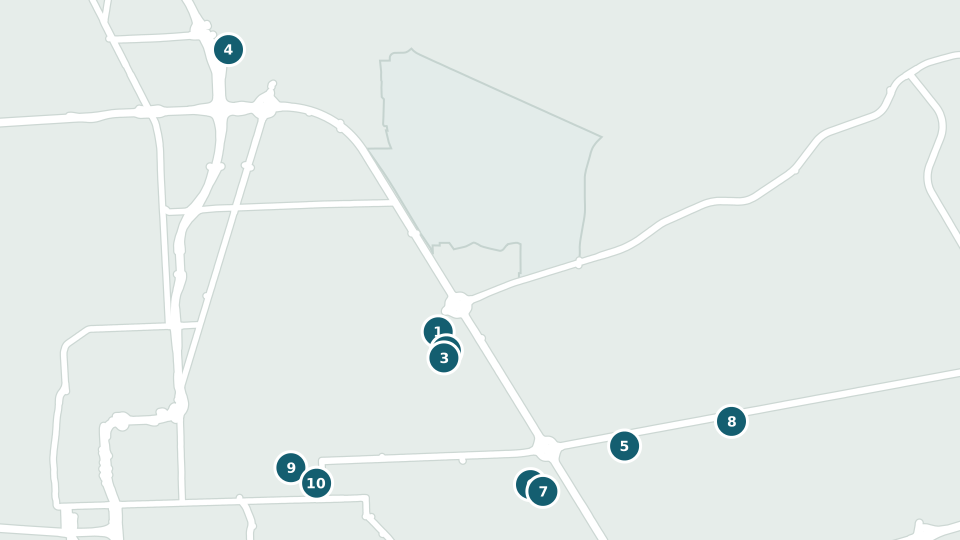
10 options near Merrydale, LA, nearest first. Compare services and locations, then call to check availability.
Call (833) 659-6966Ask about your optionsThis number connects to our central helpline, not directly to a listed facility.
Check which services are available for your needs.
Confirm payment options and any waiting time directly.
Ask what information the program needs from you.
Looking for drug rehab centers can feel overwhelming, especially when you are already carrying a lot. Knowing what to ask when you call a program can make the first conversation less stressful and help you figure out whether a place is the right fit. It is completely normal to have questions before your first visit, and most programs expect them.
When you contact a treatment program, you can ask what happens at the first appointment. Many providers begin with an assessment, sometimes called an intake or evaluation, where a counselor or clinician asks about your substance use, health history, and what kind of support you need. You can ask how long the assessment takes, whether it happens in person or by phone, and what documents or information to bring. You can also ask whether you will meet with a counselor that same day or be scheduled for a follow-up.
Cost is one of the most common worries, so feel free to ask directly about it. You can ask what the program charges, what forms of payment it accepts, and whether it works with your insurance or offers a sliding scale. If you do not have insurance, ask whether the program has other options for people paying on their own.
It also helps to ask about the schedule and level of care. Some people need daily support, while others do well meeting with a counselor once or twice a week. You can ask what services are available, whether the program offers medication-assisted treatment if that is something you are interested in, what a typical week looks like, and how long most people stay in the program. There is no single right answer, so honest questions help you find a program that matches your life.
You can ask who will actually be working with you, such as counselors, doctors, or peer support specialists, and whether family members can be involved if you want them to be. Privacy is fair to ask about too. Confidentiality rules protect people seeking substance use treatment, and a program can explain how your information is handled.
If transportation, work schedules, or childcare make treatment harder to reach, mention it. Some programs can adjust appointment times or point you toward local resources. The goal of the first conversation is simply to understand what is available and what feels workable for you. You do not have to commit to anything before you have answers to your questions.
Call (833) 659-6966
When you compare drug rehab centers, one of the first things to look at is how much structure each program provides. Residential treatment means you stay on site full time, which removes you from daily triggers and gives round-the-clock support. Day programs, often called partial hospitalization, involve treatment most days of the week while you sleep at home.
Intensive outpatient programs usually meet three to five times per week and are often scheduled around work or school. Traditional outpatient counseling is the least intensive option and typically means one or two sessions a week. If you are unsure which fits your situation, asking a program directly about how they assess new clients is a practical first step.
Call (833) 659-6966Check which services each program reports offering.
Consider travel distance and whether care is in person or remote.
Ask the program directly about payment and coverage.
Confirm how to contact the program and what to expect.
A first call to a treatment center is your chance to gather information, so treat it like an interview. Useful questions include: What levels of care do you provide? How long is the program, and can it be extended?
Is medication for addiction treatment available? Do you treat anxiety, depression, or other mental health concerns at the same time? What does the daily schedule involve?
What is the full cost, and what does my insurance cover? Do you involve family, and what support is there after discharge? Programs should answer these plainly and let you take your time deciding.
Payment for addiction treatment in Louisiana is often handled through private health insurance plans, which frequently cover portions of detox, inpatient care, outpatient programs, and counseling at drug rehab centers across the state. Many facilities also accept public coverage such as Medicaid and Medicare when individuals qualify, though benefits and network participation differ, so it is essential to verify your specific policy details before enrolling. For those who are uninsured or facing gaps in coverage, some drug rehab centers offer sliding-scale fees that adjust the cost of treatment based on household income and financial circumstances.
Self-pay is another common route, allowing individuals or families to cover the expense directly, and in certain cases facilities can arrange payment plans to make care more affordable.
A useful way to narrow your options is to make a short checklist and ask every program the same questions. Compare the levels of care offered, since a center that only provides outpatient sessions may not be right if you need a residential setting. Look at program length and structure, including how many hours per week you would be in treatment.
Ask what therapies are used, whether medication is available if you want it, and how the program handles co-occurring mental health concerns. Confirm the total cost, what insurance covers, and whether there are fees beyond the stated rate. Distance matters too, especially if family visits or aftercare appointments are part of your plan.
Writing down the answers as you go makes the comparison much easier.
Looking for drug rehab centers can feel overwhelming, especially when you are already carrying a lot.

For any urgent medical situation, overdose, or crisis, calling 911 is the fastest way to get help, and it is safer to call and not need it than to wait. Emergency services can stabilize the person and take them to a hospital for evaluation. If the concern is a mental health or substance use crisis that is not a medical emergency, the 988 Suicide and Crisis Lifeline offers confidential support by call or text around the clock.
You do not need to be certain how serious things are before reaching out. After the crisis is addressed, a drug rehab center or treatment referral line can help with next steps.
If you or someone else is in immediate danger, call 911 now.
Call (833) 659-69662455 Wooddale Boulevard, Baton Rouge, LA, 70805
Active
2156 Wooddale Boulevard, Suite 750, Baton Rouge, LA, 70806
Active
2121 Wooddale Boulevard, Suite B, Baton Rouge, LA, 70806
Active
7855 Howell Boulevard, Suite 100, Baton Rouge, LA, 70807
Active
235 Cora Drive, Baton Rouge, LA, 70815
Active
422 Colonial Drive, Baton Rouge, LA, 70806
Active
624 Connells Park Lane, Suite A, Baton Rouge, LA, 70806
Active
11188 Florida Boulevard, Baton Rouge, LA, 70815
Active
4363 Convention Street, Baton Rouge, LA, 70806
Active
216 South Foster Drive, Baton Rouge, LA, 70806
Active
Ask the program directly when you schedule the visit, since requirements vary. In general, it helps to have a photo ID, your insurance card if you have one, a list of any medications you take, and basic information about your health history. If paperwork is available ahead of time, filling it out before the appointment can make the day less rushed. If you are missing something, call and ask whether it is still okay to come in.
Yes, and you should. Programs expect questions about payment, so ask what the visit or treatment costs, which insurance plans they accept, whether they offer a sliding scale based on income, and what your options are if you are uninsured. Getting clear answers about money up front can help you avoid surprises later and make it easier to compare programs.
A good first move is writing down what you want help with, then calling two or three programs to compare what they offer. During the first call, ask what levels of care they provide, how long the program runs, and what it costs with your insurance. Take notes so you can compare the answers side by side. There is no obligation to enroll during that first conversation.
There is no single answer, because treatment length depends on your needs, the level of care, and how you respond. Residential programs often run from a few weeks to a few months, while outpatient care can stretch much longer with fewer hours per week. Many people continue with counseling or support groups after a formal program ends. A program that promises a guaranteed timeline for everyone is worth questioning.
Start by contacting your insurance company to ask what substance use treatment is covered and which programs are in network. Then confirm the details with the rehab center itself, since billing practices vary. Ask specifically about deductibles, co-pays, and anything that might not be covered, like certain medications or extra services. If you are uninsured, ask the program about sliding-scale fees, payment plans, or state-funded options.