 National Rehab Helpline
4017 Williamsburg Court, Suite 100, Fairfax, VA, 22032
Active
- Outpatient
- Private insurance
- Self-pay
City
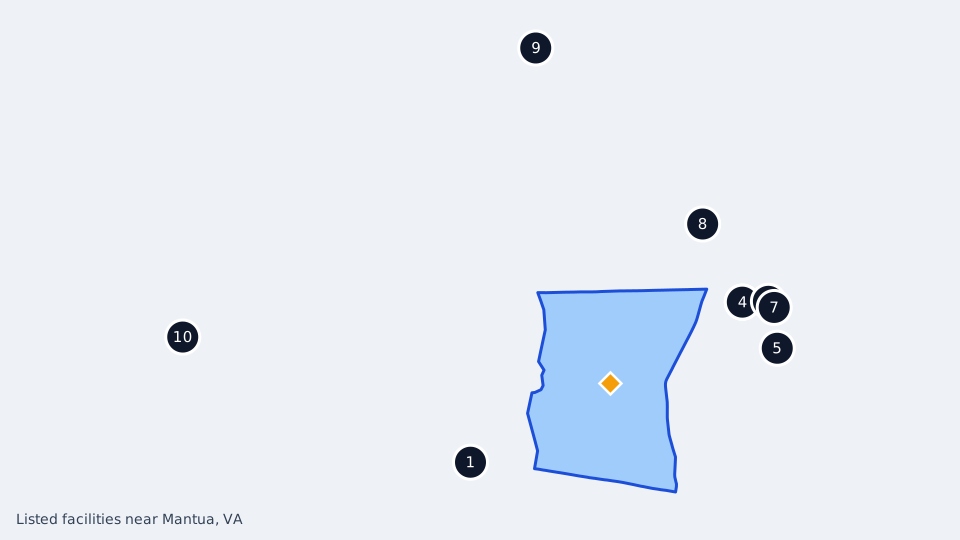
10 options near Mantua, VA, nearest first. Compare services and locations, then call to check availability.
Call (833) 659-6966Ask about your optionsThis number connects to our central helpline, not directly to a listed facility.
Check which services are available for your needs.
Confirm payment options and any waiting time directly.
Ask what information the program needs from you.
When you contact a program near Mantua for substance use treatment, it helps to have a few questions ready so you can compare your options with confidence. You can ask what an intake appointment looks like, how long assessments usually take, and whether you will meet with a counselor one-on-one before any treatment plan is set. It is also fair to ask which levels of care a program offers, such as outpatient counseling, intensive outpatient programs, medication support, or residential care, so you can gauge whether it matches what you are looking for.
Practical questions matter too: what hours the program operates, how family members can be involved, and what happens if you need a different level of support than the one you start with. Programs that serve adults in the area typically begin with an assessment and a conversation about your goals, and you can ask at any point how your progress will be reviewed. If you are calling for someone else, ask whether the program includes family sessions or guidance for loved ones.
Taking notes during these calls can make it easier to weigh one program against another and choose the setting where you feel most comfortable starting.
Call (833) 659-6966
Treatment programs vary in intensity, and understanding the main types helps you compare what is available near you. Detox programs provide short-term medical oversight while a drug leaves your system, while inpatient or residential rehab has you live at the facility for a set period of care. Outpatient programs let you live at home and attend scheduled sessions, and intensive outpatient programs offer more weekly hours for people who need structure without full-time residence.
Some centers also provide medication-assisted treatment, which combines approved medications with counseling, or aftercare planning that continues once a formal program ends.
Call (833) 659-6966Check which services each program reports offering.
Consider travel distance and whether care is in person or remote.
Ask the program directly about payment and coverage.
Confirm how to contact the program and what to expect.
Before your first call, write down what you want to know so nothing gets lost. Useful questions include: What levels of care does the program offer? What does a typical daily schedule look like?
How long do most people stay? What therapies are used? Is medication-assisted treatment available if it applies to you?
How does the program handle co-occurring mental health conditions like depression or anxiety? What does the program cost, and which insurance plans does it accept? What happens after discharge, and is there an aftercare or alumni plan?
Cost is one of the first questions families ask when looking into drug rehab centers, and in Virginia there are several common ways to pay for care. Many residents rely on private insurance, which typically provides at least partial coverage for services such as medically supervised detox, residential treatment, and ongoing therapy. Others may qualify for public coverage through programs like Medicaid, though eligibility requirements apply and should be confirmed in advance.
Facilities across the state also frequently provide sliding-scale fees, which set charges according to what a person can realistically afford, and self-pay is always an option for those with the means to fund treatment directly. No matter which route you choose, verifying payment details with each individual facility ahead of time helps avoid surprises.
When you compare rehab centers nearby, look first at whether a program offers the level of care you actually need, such as detox support, residential treatment, or outpatient services. Next, consider the treatment approaches used, including individual counseling, group therapy, family involvement, and medication-assisted treatment if relevant. Practical factors matter too: distance from home, whether your insurance is accepted, total cost after any coverage, and whether family can visit or take part in sessions.
A program that clearly explains its admissions process and answers your questions without pressure is usually easier to work with than one that pushes you to decide on the spot.
When you contact a program near Mantua for substance use treatment, it helps to have a few questions ready so you can compare your options with confidence.

If someone is in immediate danger, such as an overdose, a medical emergency, or a situation where they might harm themselves or others, call 911 right away. If you find someone unresponsive or with severe symptoms, do not wait to see whether treatment alone can wait; emergency responders can start help on the way. You can also reach the national mental health and suicide crisis line by calling or texting 988, which connects you to trained crisis counselors around the clock.
If you are with someone during a suspected overdose, call 911 rather than attempting to manage it alone.
If you or someone else is in immediate danger, call 911 now.
Call (833) 659-69664017 Williamsburg Court, Suite 100, Fairfax, VA, 22032
Active
8221 Willow Oaks Corporate Drive, Suite 4-430, Fairfax, VA, 22031
Active
8221 Willow Oaks Corporate Drive, Fairfax, VA, 22031
Active
8221 Willow Oaks Corporate Drive, Suite 425, Fairfax, VA, 22031
Active
3300 Gallows Road, PSB 7N, Falls Church, VA, 22042
Active
8280 Willow Oaks Corporate Drive, Suite 125, Fairfax, VA, 22031
Active
8821 Willow Oaks Corporate Drive, Suite 425, Fairfax, VA, 22031
Active
2815 Old Lee Highway, Floor 2, Fairfax, VA, 22031
Active
110 Pleasant Street NW, Suite D, Vienna, VA, 22180
Active
11204 Waples Mill Road, Fairfax, VA, 22030
Active
Contact us for more information.
Ask what an intake appointment involves, which levels of care the program offers (such as outpatient counseling, intensive outpatient, or residential treatment), what hours services are available, and how the program reviews your progress over time. You can also ask how family members can participate, which is helpful if someone close to you is part of your support system.
No. A first visit is usually an assessment and a conversation about your needs and goals, not a commitment. Use that time to ask questions, understand what the program recommends, and decide whether it feels like the right fit before agreeing to anything.
There is no single timeline, because the right length depends on the level of care, the substance involved, and your progress. Detox often lasts a few days to a week, residential programs commonly run 30 to 90 days, and outpatient care can continue for months. Longer and more structured programs tend to give people more time to practice new habits, but the best fit is one you can realistically start and finish.
Many rehab centers accept private insurance, and coverage for substance use treatment is included in most health plans sold under current law. What is covered varies, though, so call your insurer and ask which levels of care are covered, what your out-of-pocket costs would be, and whether a specific program is in network. Get the answers in writing if you can, and ask the treatment center's admissions staff to verify your benefits directly with the insurer.
Inpatient rehab means you live at the treatment center full time for the duration of the program, with 24-hour support and a structured daily schedule. Outpatient rehab means you live at home and travel to the facility for scheduled sessions, which can range from a few hours a week to nearly full-time hours in an intensive program. Inpatient care offers more support and separation from daily triggers, while outpatient care lets you keep working or caring for family.
Last updated