 National Rehab Helpline
2711 Middleburg Drive, Suite 212, Columbia, SC, 29204
Active
- Outpatient
- Medicaid
- Self-pay
City
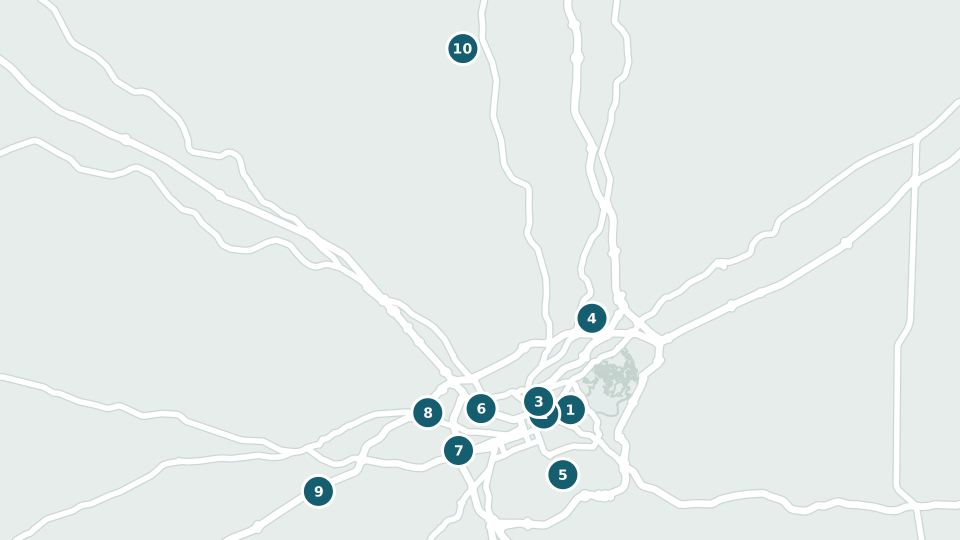
10 options near Forest Acres, SC, nearest first. Compare services and locations, then call to check availability.
Call (833) 659-6966Ask about your optionsThis number connects to our central helpline, not directly to a listed facility.
Check which services are available for your needs.
Confirm payment options and any waiting time directly.
Ask what information the program needs from you.
When you call a treatment program near Forest Acres, it helps to have a few questions ready. Start with the basics: ask whether the program serves adults or adolescents, and whether it can address a mental health condition alongside substance use. Some nearby programs confirm care for both adolescents and adults, and some confirm treatment for co-occurring disorders, so it is fair to ask any provider directly which groups and needs they serve.
You can also ask what a first visit looks like, whether an assessment is scheduled by phone or in person, and who will be present. If you are seeking help for a teen or young adult, confirm the ages the program accepts before you travel. If you are also dealing with depression, anxiety, or another diagnosis, ask whether the program coordinates care for both concerns at once.
Other fair questions include whether family members can take part, what a typical week of counseling or group sessions involves, and how the program supports people after the initial phase of care ends. There is no single right answer; the goal is to find a program that fits your situation and treats you with respect from the first call.
Call (833) 659-6966
Most drug rehab centers organize treatment into levels of care, and knowing the sequence helps you match a program to your situation. Outpatient counseling usually means scheduled therapy sessions while you keep living at home, which works best when your use is less severe or you have strong support around you. Intensive outpatient programs (IOP) add more weekly hours, often with group therapy several days a week, so you can still work or care for family while getting structured treatment.
Partial hospitalization programs (PHP) meet most weekdays for several hours each day and are a step down from full-time care. Residential treatment means you live at the facility for a set period, which removes you from daily triggers and gives round-the-clock structure. Some programs also offer medication-assisted treatment (MAT), such as methadone, buprenorphine, or naltrexone, combined with counseling.
Ask each program which levels it provides in-house and where it refers people for the ones it does not.
Call (833) 659-6966Check which services each program reports offering.
Consider travel distance and whether care is in person or remote.
Ask the program directly about payment and coverage.
Confirm how to contact the program and what to expect.
A first call to a rehab center is the right time to gather facts, and specific questions get better answers than general ones. Start with treatment basics: What levels of care do you offer directly, and how long does each last? Ask whether they provide medication-assisted treatment and, if so, which medications.
Clarify money matters early by asking what insurance plans they accept, what a private-pay rate covers, and whether there are extra charges for services not in the quoted price. Ask about the daily schedule, the ratio of staff to clients, and the credentials of the people who would be treating you. It is also fair to ask how they handle a person who relapses during treatment and whether family members can participate in therapy or visit.
Finally, ask how soon an opening exists and what the intake process involves, including any assessment required before admission.
Cost is one of the first concerns people raise when considering drug rehab centers in South Carolina, and the good news is that there are multiple ways to manage it. The most common approach is private insurance; plans purchased through an employer or the health insurance marketplace frequently include substance use disorder treatment as an essential health benefit, covering part or all of detoxification, residential programs, and therapy sessions. Residents who qualify for state and federal assistance programs may be able to use public coverage, but eligibility requirements and covered services differ from person to person, so confirmation is essential.
Beyond insurance, many drug rehab centers in South Carolina offer sliding-scale payment structures designed to accommodate lower incomes, and some nonprofit or community-based programs may reduce fees further. Self-payment remains a straightforward choice for those who can afford it or prefer privacy. No matter which option applies to you, always verify coverage directly with both your insurer and the treatment facility, ask about deductibles and copays, and get a full cost estimate in advance.
Choosing among nearby drug rehab centers comes down to fit rather than distance alone. First check whether a program offers the level of care you need right now; a center that only does outpatient counseling will not suit someone who needs medical detox. Confirm that the program is licensed to operate in its state and ask whether it holds any additional accreditations, since these indicate that outside bodies have reviewed its standards.
Look at the treatment methods offered: programs using approaches like cognitive behavioral therapy, contingency management, or medication-assisted treatment have substantial research behind them. Consider logistics honestly, including cost after insurance, commute time for outpatient care, and whether the facility allows the family involvement you want. Ask about the ratio of clinical staff to clients, because very large groups with little individual attention rarely serve people well.
Length of stay matters too, since longer engagement is generally associated with better results. Visiting in person, if possible, lets you judge cleanliness, atmosphere, and how staff interact with current clients.
When you call a treatment program near Forest Acres, it helps to have a few questions ready.

If someone is in immediate physical danger, such as an overdose, severe withdrawal, chest pain, difficulty breathing, or thoughts of suicide, call 911 right away. Emergency medical services can stabilize the situation regardless of insurance status or immigration status. If the danger involves a drug overdose, calling 911 is still the correct first step, and many states have Good Samaritan laws that protect callers from certain drug-related charges.
For a mental health or suicidal crisis, you can also call or text 988, the Suicide and Crisis Lifeline, which connects you to trained counselors around the clock. If you are helping someone else, stay with them, keep them awake and breathing if possible, and gather any pill bottles or drug packaging to show responders. Once the emergency has passed, a hospital social worker or case manager can usually point you toward rehab centers and treatment programs that accept new patients.
If you or someone else is in immediate danger, call 911 now.
Call (833) 659-69662711 Middleburg Drive, Suite 212, Columbia, SC, 29204
Active
1731 Laurel Street, Columbia, SC, 29201
Active
2711 Colonial Drive, Columbia, SC, 29203
Active
610 Faison Drive, Columbia, SC, 29203
Active
1421 Bluff Road, Columbia, SC, 29201
Active
720 Gracern Road, Suite 120, Columbia, SC, 29210
Active
560 Chris Drive, Suite A, West Columbia, SC, 29169
Active
185 Lott Court, West Columbia, SC, 29169
Active
1068 South Lake Drive, Lexington, SC, 29073
Active
1403 Greenbrier Mossydale Road, Winnsboro, SC, 29180
Active
Ask whether the program serves your age group, whether it treats co-occurring mental health conditions, how the first appointment is scheduled, and what happens at an initial assessment. It is also reasonable to ask about family involvement and what support continues after the first phase of treatment.
Yes. At least one program in the Columbia area confirms that it serves adolescents and adults and also treats co-occurring disorders. Because offerings differ by provider, confirm age ranges and mental health services with any program you contact.
Length of stay varies with the level of care and your individual needs. Detox often lasts three to ten days, while residential programs commonly run from thirty to ninety days. Outpatient programs can extend over several months because you attend sessions a few times each week while living at home. Many people continue with some form of counseling or support group well beyond the initial program.
Many do, and insurance often covers a substantial portion of treatment, but the details depend on your specific plan and the facility. Under current law, most health plans must cover mental health and substance use treatment at least partially. Before enrolling, ask the center to verify your benefits in writing, including your deductible, copays, and how many days are covered. Also confirm whether the facility is in-network or out-of-network for your plan, since that difference can significantly change your costs.
Inpatient or residential rehab means living at the treatment facility full-time, usually for several weeks, with around-the-clock care and daily programming. Outpatient rehab means living at home while attending scheduled treatment sessions, which can range from a few hours a week in standard outpatient care to nearly full days in a partial hospitalization program. Inpatient offers more structure and removes you from daily triggers, while outpatient lets you keep working and caring for family. The right choice depends on how severe the problem is, how stable your home environment is, and what you can practically manage.