 National Rehab Helpline
4158 Washington Road, Suite 4, Evans, GA, 30809
Active
- Outpatient
- Medication-assisted treatment
- Self-pay
City
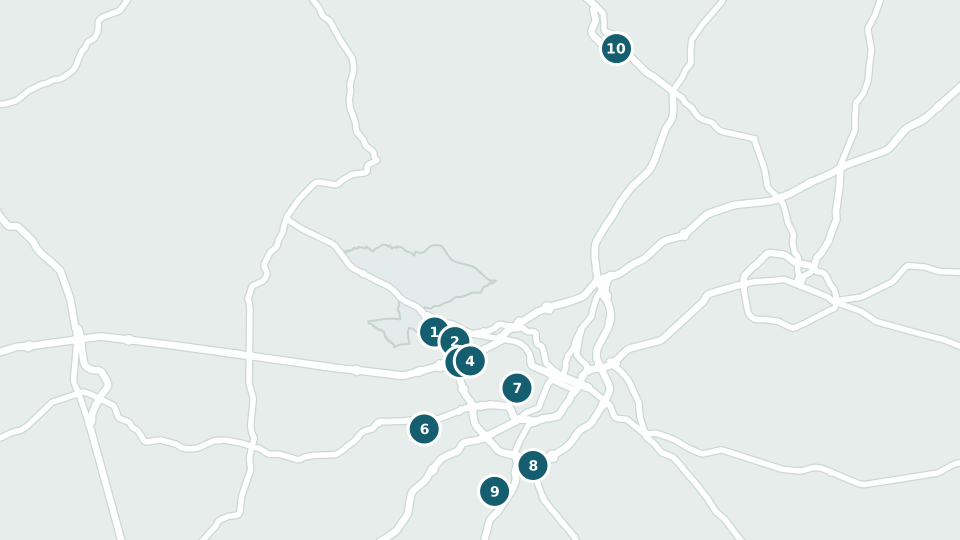
10 options near Evans, GA, nearest first. Compare services and locations, then call to check availability.
Call (833) 659-6966Ask about your optionsThis number connects to our central helpline, not directly to a listed facility.
Check which services are available for your needs.
Confirm payment options and any waiting time directly.
Ask what information the program needs from you.
If you are looking into drug rehab centers in the Evans area, the first conversation with a program is a chance to ask questions and get a feel for how it works. When you call or visit, you can expect to talk about why you are seeking help, your history with substance use, and any health concerns you want taken seriously. It is fair to ask what an assessment involves, who conducts it, and how the program decides what level of care fits your situation, whether that is outpatient counseling, structured sessions during the day, or a residential stay.
You can also ask how family members are included, what a typical week looks like, and how the program supports people who are working, in school, or caring for children. Practical questions matter too: ask about costs, what forms of payment are accepted, and what happens if you need more support than the program offers. A good first contact should leave you feeling heard, not rushed, and no program should pressure you into a decision before you have had time to think it over and compare your options.
Call (833) 659-6966
Drug rehab centers typically offer several levels of care, and knowing the main ones helps you figure out where to start. The most structured option is inpatient or residential treatment, where you live at the facility for the length of the program. Partial hospitalization and intensive outpatient programs let you live at home while attending treatment for many hours each week.
Standard outpatient care involves fewer weekly sessions and works best when you have a stable home environment. Some programs also include medically supervised withdrawal care at the start, though this depends on the facility. The right level depends on how long you have been using, your health, and what support you have at home.
Call (833) 659-6966Check which services each program reports offering.
Consider travel distance and whether care is in person or remote.
Ask the program directly about payment and coverage.
Confirm how to contact the program and what to expect.
When you call a drug rehab center for the first time, it helps to have a list ready. Ask which levels of care they offer and how they decide which one fits you. Ask how long the program lasts and what a typical day or week looks like.
Find out whether they treat mental health conditions alongside addiction, and what therapies they use. Ask about total cost, what insurance they accept, and any extra fees. Finally, ask what happens after the program ends, including relapse support and referrals to ongoing care.
Writing down the answers lets you compare programs fairly.
Figuring out how to pay for addiction treatment is often one of the first concerns for people searching for drug rehab centers in Georgia, and fortunately there are several common ways costs are handled. For many, private insurance is the primary method, as employer-sponsored and marketplace plans frequently include behavioral health benefits. Georgia residents who qualify for public coverage, like Medicaid, may find that certain treatment services are included, though eligibility rules and covered services differ.
Some rehab programs also use a sliding-scale fee structure, adjusting what patients pay according to their financial situation, which helps lower the barrier to getting help. Those without insurance can always choose to self-pay. Because policies, eligibility, and accepted payment types change over time, contacting a facility ahead of time to confirm what they accept is strongly advised.
Comparing drug rehab centers comes down to a few practical criteria. First, check whether the program offers the level of care you need, whether that is residential, intensive outpatient, or standard outpatient. Second, ask how long the program lasts and what a typical weekly schedule looks like.
Third, find out what the treatment actually includes, such as individual counseling, group therapy, medication support, or family involvement. Fourth, ask about cost and what insurance the program accepts before you commit. Finally, consider logistics like distance from home, whether family can be involved, and what happens after the program ends.
A center that answers these questions clearly and without pressure is usually easier to work with.
If you are looking into drug rehab centers in the Evans area, the first conversation with a program is a chance to ask questions and get a feel for how it works.

If someone is in immediate danger, such as an overdose, a serious injury, or a mental health crisis, call 911 right away. Emergency responders can provide medical care on the scene and transport the person to a hospital. You can also call or text 988, the national Suicide and Crisis Lifeline, which connects you to trained crisis counselors any time of day.
Do not wait to see whether the situation resolves on its own when a life may be at risk. Once the immediate emergency is handled, you can explore longer-term treatment options.
If you or someone else is in immediate danger, call 911 now.
Call (833) 659-69664158 Washington Road, Suite 4, Evans, GA, 30809
Active
210 Oak Street North, Augusta, GA, 30907
Active
3100 Perimeter Parkway, Augusta, GA, 30909
Active
3643 Walton Way Extension, Building 4, Augusta, GA, 30909
Active
300 East Hospital Road, Building 329, Augusta, GA, 30905
Active
300 East Hospital Road, Building 300, Augusta, GA, 30905
Active
1 Freedom Way, Augusta, GA, 30904
Active
3421 Mike Padgett Highway, Building BHCC, Augusta, GA, 30906
Active
2357 Tobacco Road, Augusta, GA, 30906
Active
603 Augusta Road, Edgefield, SC, 29824
Active
Ask what the assessment involves, which levels of care the program offers, how long treatment typically lasts, what a daily or weekly schedule looks like, and how family can be involved. It is also reasonable to ask about costs, accepted payment methods, and what happens if you need a different level of care than the program provides. A first call or visit should feel unhurried and respectful, and you should be free to compare programs before deciding.
No. A first conversation is for gathering information and seeing whether the program feels like a good fit. Take notes, ask follow-up questions, and compare a few options before choosing. If anyone pressures you to decide immediately or asks for payment before explaining services clearly, treat that as a warning sign and keep looking.
Most programs begin with an assessment where a counselor or clinician asks about your substance use, health history, and living situation. Based on that conversation, they recommend a level of care, such as residential, intensive outpatient, or standard outpatient. You are free to ask questions and compare options before committing. Many people also involve a family member or trusted friend in the process.
It varies widely. Some programs are around 30 days, while others run 60, 90 days, or longer, and outpatient care can continue for months. The right length depends on the severity of the substance use, your history with treatment, and what you can practically manage. Longer stays are not automatically better, but research generally supports more time in treatment rather than less. Ask each program how they decide when someone is ready to step down.
Calling the program directly is the best way to get accurate cost information, but you can prepare by gathering your insurance card first. Ask whether the program is in network, what your out-of-pocket costs would be, and whether there are extra fees beyond the daily or weekly rate. If you do not have insurance, ask whether the center offers payment plans or a sliding scale. Get any cost estimates in writing before you enroll.