 National Rehab Helpline
819 West Esplanade Avenue, Suite B, Kenner, LA, 70065
Active
- Outpatient
- Medication-assisted treatment
- Medicaid
- Medicare
City
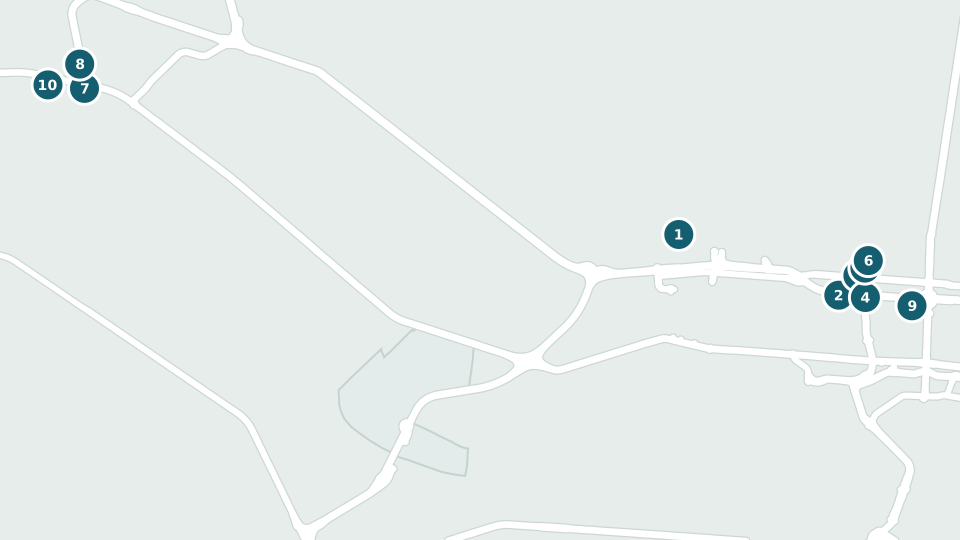
10 options near Destrehan, LA, nearest first. Compare services and locations, then call to check availability.
Call (833) 659-6966Ask about your optionsThis number connects to our central helpline, not directly to a listed facility.
Check which services are available for your needs.
Confirm payment options and any waiting time directly.
Ask what information the program needs from you.
When you reach out to a treatment program in the Destrehan area, it helps to know what a first contact usually covers. Most programs begin with a screening or assessment, where a staff member asks about your substance use, your health history, and what kind of support you need. From there, they can talk with you about the levels of care they offer, such as outpatient counseling, medication-assisted treatment, or more structured residential programs, and help you figure out which fits your situation.
You can also ask practical questions before you commit to anything. It is reasonable to ask whether a program serves active military members or veterans if that applies to you, since some facilities flag this as a confirmed service attribute. You can ask about counseling approaches, family involvement, session schedules, and how the program handles privacy. If a program cannot meet your needs, ask whether they can point you toward another option nearby or in a neighboring community.
Calling more than one program is a normal step, not a sign of indecision. Comparing answers about availability, approaches, and what a typical week looks like can help you feel more confident in your choice. Take notes if that helps, and do not hesitate to ask a staff member to repeat or explain anything that is unclear.
Call (833) 659-6966
Drug rehab centers typically offer several levels of care, and knowing the main ones helps you figure out where to start. The most structured option is inpatient or residential treatment, where you live at the facility for the length of the program. Partial hospitalization and intensive outpatient programs let you live at home while attending treatment for many hours each week.
Standard outpatient care involves fewer weekly sessions and works best when you have a stable home environment. Some programs also include medically supervised withdrawal care at the start, though this depends on the facility. The right level depends on how long you have been using, your health, and what support you have at home.
Call (833) 659-6966Check which services each program reports offering.
Consider travel distance and whether care is in person or remote.
Ask the program directly about payment and coverage.
Confirm how to contact the program and what to expect.
When you call a drug rehab center for the first time, it helps to have a list ready. Ask which levels of care they offer and how they decide which one fits you. Ask how long the program lasts and what a typical day or week looks like.
Find out whether they treat mental health conditions alongside addiction, and what therapies they use. Ask about total cost, what insurance they accept, and any extra fees. Finally, ask what happens after the program ends, including relapse support and referrals to ongoing care.
Writing down the answers lets you compare programs fairly.
Payment for addiction treatment in Louisiana is often handled through private health insurance plans, which frequently cover portions of detox, inpatient care, outpatient programs, and counseling at drug rehab centers across the state. Many facilities also accept public coverage such as Medicaid and Medicare when individuals qualify, though benefits and network participation differ, so it is essential to verify your specific policy details before enrolling. For those who are uninsured or facing gaps in coverage, some drug rehab centers offer sliding-scale fees that adjust the cost of treatment based on household income and financial circumstances.
Self-pay is another common route, allowing individuals or families to cover the expense directly, and in certain cases facilities can arrange payment plans to make care more affordable.
Comparing drug rehab centers comes down to a few practical criteria. First, check whether the program offers the level of care you need, whether that is residential, intensive outpatient, or standard outpatient. Second, ask how long the program lasts and what a typical weekly schedule looks like.
Third, find out what the treatment actually includes, such as individual counseling, group therapy, medication support, or family involvement. Fourth, ask about cost and what insurance the program accepts before you commit. Finally, consider logistics like distance from home, whether family can be involved, and what happens after the program ends.
A center that answers these questions clearly and without pressure is usually easier to work with.
When you reach out to a treatment program in the Destrehan area, it helps to know what a first contact usually covers.

If someone is in immediate danger, such as an overdose, a serious injury, or a mental health crisis, call 911 right away. Emergency responders can provide medical care on the scene and transport the person to a hospital. You can also call or text 988, the national Suicide and Crisis Lifeline, which connects you to trained crisis counselors any time of day.
Do not wait to see whether the situation resolves on its own when a life may be at risk. Once the immediate emergency is handled, you can explore longer-term treatment options.
If you or someone else is in immediate danger, call 911 now.
Call (833) 659-6966819 West Esplanade Avenue, Suite B, Kenner, LA, 70065
Active
4933 Wabash Street, Metairie, LA, 70001
Active
4517 Veterans Memorial Boulevard, Metairie, LA, 70006
Active
4430 South I-10 Service Road West, Suite 100, Metairie, LA, 70001
Active
4330 Loveland Street, Suite A, Metairie, LA, 70001
Active
3901 Houma Boulevard, Suite 404, Metairie, LA, 70006
Active
1809 West Airline Highway, La Place, LA, 70068
Active
309 Belle Terre Boulevard, Laplace, LA, 70068
Active
2329 Edenborn Avenue, Metairie, LA, 70001
Active
500 Rue de Sante, Laplace, LA, 70068
Active
Ask about the levels of care offered, what an assessment involves, the counseling approaches used, and whether the program can meet any specific needs you have, such as services for active military members or veterans. It is also fair to ask about scheduling, privacy, and what a typical week of treatment looks like.
Yes. Calling several programs and comparing what they offer is a common and sensible step. Asking each one similar questions about care options, availability, and how they support clients can help you find the right fit for your situation.
Most programs begin with an assessment where a counselor or clinician asks about your substance use, health history, and living situation. Based on that conversation, they recommend a level of care, such as residential, intensive outpatient, or standard outpatient. You are free to ask questions and compare options before committing. Many people also involve a family member or trusted friend in the process.
It varies widely. Some programs are around 30 days, while others run 60, 90 days, or longer, and outpatient care can continue for months. The right length depends on the severity of the substance use, your history with treatment, and what you can practically manage. Longer stays are not automatically better, but research generally supports more time in treatment rather than less. Ask each program how they decide when someone is ready to step down.
Calling the program directly is the best way to get accurate cost information, but you can prepare by gathering your insurance card first. Ask whether the program is in network, what your out-of-pocket costs would be, and whether there are extra fees beyond the daily or weekly rate. If you do not have insurance, ask whether the center offers payment plans or a sliding scale. Get any cost estimates in writing before you enroll.