 National Rehab Helpline
106 West Port Street, Deridder, LA, 70634
Active
- Outpatient
- Medication-assisted treatment
- Medicaid
- Medicare
City
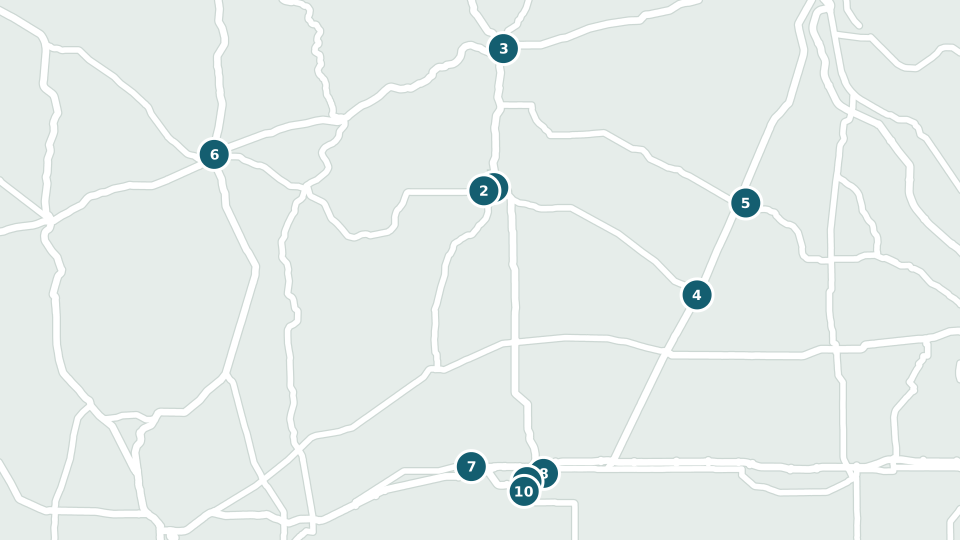
10 options near DeRidder, LA, nearest first. Compare services and locations, then call to check availability.
Call (833) 659-6966Ask about your optionsThis number connects to our central helpline, not directly to a listed facility.
Check which services are available for your needs.
Confirm payment options and any waiting time directly.
Ask what information the program needs from you.
When you reach out to a drug rehab center in DeRidder for the first time, it helps to know that the initial conversation is usually a chance for the program to learn about you and for you to learn about them. You can ask what happens at a first appointment, who you will meet with, and roughly how long the visit takes. Many programs begin with an assessment, which is simply a set of questions about your substance use, your health, and your goals for treatment. The answers help the staff suggest a level of care that fits your situation, such as outpatient counseling or a more structured program.
It is fair to ask a program directly what services it offers, whether it works with adults or also teens, and what a typical week of treatment looks like. If you have work or family obligations, ask about appointment times, transportation, and whether evening or flexible scheduling is available. You can also ask how families are included, what support exists after formal treatment ends, and what the program expects from you as a participant. If money is a concern, ask about costs, payment options, and any sliding scale or funding sources the program accepts, since these details vary from place to place.
Some visitors bring a supportive friend or relative to the first visit, and that is usually welcome. You can also write down questions ahead of time so nothing slips your mind. The purpose of a first contact is not to commit you to anything; it is to give you a clear picture of the options in and around DeRidder so you can decide what feels right for you.
Call (833) 659-6966
Every level of drug and alcohol treatment serves a different need, so it helps to know what each one actually involves. Residential care means sleeping at the center and following a full daily schedule of therapy and group sessions. Partial hospitalization is a step down, with full days of treatment several days a week before you return home in the evening.
Standard outpatient care is typically one or two sessions per week and works best when your home situation is stable. Sober living homes are another option: they are not treatment itself, but they offer a substance-free place to stay while you attend a program.
Call (833) 659-6966Check which services each program reports offering.
Consider travel distance and whether care is in person or remote.
Ask the program directly about payment and coverage.
Confirm how to contact the program and what to expect.
Your first conversation with a treatment center is your chance to screen them as much as they screen you. Ask who provides the clinical care and what the staff-to-client ratio is. Ask whether the length of stay is fixed or adjusted to your progress.
Find out what a withdrawal or detox period involves, if that applies, and whether it happens at the same facility or somewhere else. It is also fair to ask about visitation rules, how they handle a return to use during treatment, and what support exists for families. Closing with cost and insurance questions early can save you from falling for a program you cannot afford.
Payment for addiction treatment in Louisiana is often handled through private health insurance plans, which frequently cover portions of detox, inpatient care, outpatient programs, and counseling at drug rehab centers across the state. Many facilities also accept public coverage such as Medicaid and Medicare when individuals qualify, though benefits and network participation differ, so it is essential to verify your specific policy details before enrolling. For those who are uninsured or facing gaps in coverage, some drug rehab centers offer sliding-scale fees that adjust the cost of treatment based on household income and financial circumstances.
Self-pay is another common route, allowing individuals or families to cover the expense directly, and in certain cases facilities can arrange payment plans to make care more affordable.
Start with the kinds of care relevant to your needs.
Check each program’s listed services, location and contact details.
Contact a program to confirm availability, costs and the next step.
A good fit usually comes down to a few concrete criteria. Check which levels of care a center provides, since a place that only offers outpatient sessions may not be right if you need 24-hour support, and vice versa. Look at the therapies offered and whether they address mental health alongside substance use.
Ask what a typical stay or schedule involves and how progress is reviewed. Compare out-of-pocket costs across programs and confirm insurance acceptance in writing. The distance from home matters as well, since staying near supportive family can help, while some people do better with more distance from their usual environment.
When you reach out to a drug rehab center in DeRidder for the first time, it helps to know that the initial conversation is usually a chance for the program to learn about you and for you to learn about them.

When a situation involves overdose, serious injury, or any risk of harm, calling 911 is the fastest way to get medical help, and many states have Good Samaritan protections that encourage people to call without fear of certain drug-related penalties. Do not try to transport someone in a medical emergency yourself when responders can arrive faster. For urgent mental health or suicide-related crises, call or text 988 to speak with a trained counselor any time.
Keep these numbers saved in your phone before you need them, and if you are unsure whether a situation is emergent, treat it as one.
If you or someone else is in immediate danger, call 911 now.
Call (833) 659-6966106 West Port Street, Deridder, LA, 70634
Active
1420 Blankenship Drive, Deridder, LA, 70634
Active
105 Belview Road, Leesville, LA, 71446
Active
106 South 4th Street, P.O. Box 44, Oberlin, LA, 70655
Active
145 Hospital Drive, Oakdale, LA, 71463
Active
271 East Lamar Street, Suite 101, Jasper, TX, 75951
Active
2651 East Napoleon Street, Sulphur, LA, 70663
Active
4012 Avenue H, Lake Charles, LA, 70615
Active
2800 1st Avenue, Suite D, Lake Charles, LA, 70601
Active
4105 Kirkman Street, Lake Charles, LA, 70607
Active
Start by asking each program what levels of care it offers and whether its schedule, cost, and approach fit your life. If one program does not feel like a good match, it is reasonable to call another. The right choice is the one you can actually attend and stick with.
You do not need to be sober to ask for help. Programs are used to hearing from people who are still using, and part of their job is to help you plan a safe way forward. Be honest with the program about what you are using so they can point you to the right level of care.
Not necessarily. Outpatient and intensive outpatient programs are built around evening or daytime sessions so that many people keep working while in treatment. Residential programs require you to live at the facility for a set period, which usually means taking time away. If you are unsure which you need, describing your daily obligations to a program during the first call can help you figure out what fits your schedule.
Many do, through what is called dual-diagnosis or co-occurring disorder treatment, which addresses conditions like depression, anxiety, or trauma alongside substance use. Treating both at once is often more effective than treating one and waiting on the other. Not every program has this capability, so if mental health is part of your situation, ask directly whether they can treat co-occurring conditions and who provides that care.
Most programs provide a packing list, and common items include comfortable clothes, identification, insurance information, and any current medications in their original bottles. Facilities typically restrict certain items, such as anything containing alcohol, non-prescribed substances, and sometimes personal electronics. Reading the list carefully and following it closely makes check-in smoother, and when in doubt, call the admissions office and ask before you pack it.