 National Rehab Helpline
800 Kirnwood Drive, Desoto, TX, 75115
Active
- Hospital inpatient
- Medicaid
- Medicare
- Private insurance
City
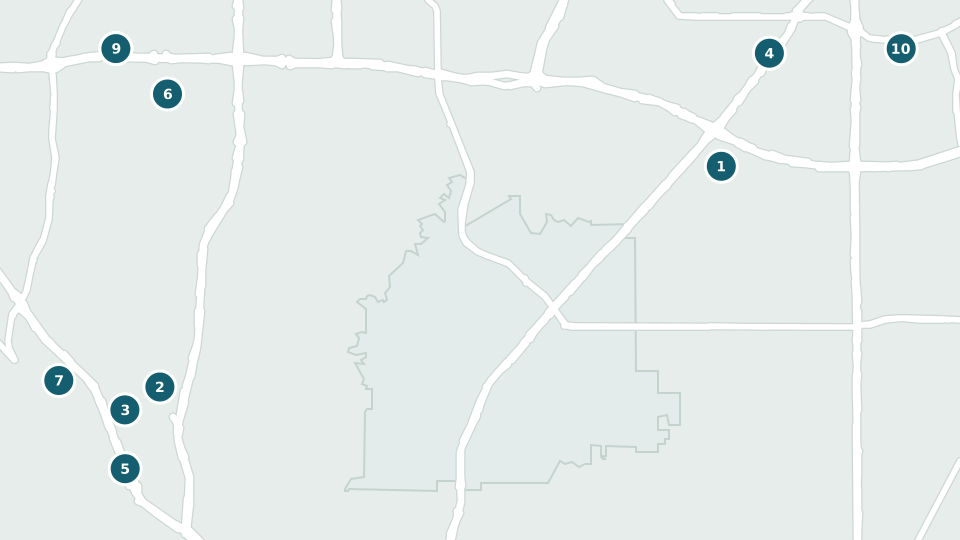
10 options near Cedar Hill, TX, nearest first. Compare services and locations, then call to check availability.
Call (833) 659-6966Ask about your optionsThis number connects to our central helpline, not directly to a listed facility.
Check which services are available for your needs.
Confirm payment options and any waiting time directly.
Ask what information the program needs from you.
This page lists 10 facilities to help compare options near Cedar Hill, TX.
Call (833) 659-6966
Drug rehab centers typically layer their services, and understanding those layers makes comparison easier. At the lighter end, standard outpatient care involves one or two therapy appointments per week. Stepping up, an intensive outpatient program packs roughly nine or more hours of treatment into multiple days, while a partial hospitalization program can run five days a week for much of the day.
Full residential or inpatient rehab has you staying on site, usually from a few weeks to ninety days, with housing, meals, and daily programming included. Detoxification services, when offered, provide medical supervision during withdrawal, sometimes followed directly by a residential stay. Medication-assisted treatment may run alongside any of these levels, pairing FDA-approved medications with behavioral therapy.
When you call a center, ask whether you would start at one level and move between levels as your needs change.
Call (833) 659-6966Check which services each program reports offering.
Consider travel distance and whether care is in person or remote.
Ask the program directly about payment and coverage.
Confirm how to contact the program and what to expect.
Before committing to a program, a phone call can surface the details that brochures leave out. Good questions include: Is detox available on site or through a partner, and is it medically supervised? What does a typical day look like for someone in the program?
Which therapies do you use, and is treatment tailored to each person or standardized? On the financial side, ask which insurers they are in-network with, whether they offer payment plans or sliding-scale fees, and what happens to your spot if insurance stops covering partway through. You should also ask about aftercare: what support exists after the formal program ends, and do they help with relapse prevention planning?
Practical logistics matter too, so ask about visitation rules, phone access, whether you can keep prescribed medications, and how they accommodate work or school obligations. Ending with 'What should I bring?' and 'When could I start?' keeps the conversation concrete.
In Texas, people fund their care at drug rehab centers using several common methods, including private insurance, public health coverage, and out-of-pocket payment. Private insurance, such as plans from major carriers or employer-sponsored policies, frequently covers a portion of treatment for substance use disorders, but you must directly verify coverage and acceptance with each center. For those who meet income and residency requirements, Texas Medicaid or federal Medicare may help pay for rehab services, though not all facilities participate in these programs, so prior eligibility confirmation is necessary.
Many centers also offer sliding-scale fees that reduce costs based on financial need, and self-pay remains a straightforward option often paired with installment plans or discounts. To determine the best payment path, contact each facility to discuss its financial policies and your personal circumstances.
Comparing rehab options works best when you apply the same criteria to each one. Start with the match between your needs and their services: someone managing withdrawal needs medical detox, while someone with a stable home life might do well in outpatient care. Verify that the facility holds a current state license, and treat any accreditation from a recognized body as a plus.
Ask what a treatment plan looks like: individualized plans that adapt over time are preferable to identical packages for everyone. Check whether they treat co-occurring mental health conditions like depression or anxiety alongside addiction, since these often travel together. Weigh the practical factors of cost, insurance participation, location relative to your support network, and work or childcare flexibility.
Pay attention to how admission staff treat you on the phone; dismissive or high-pressure callers often reflect the culture behind them. Finally, ask about aftercare and relapse prevention, because treatment does not end at discharge.
This page lists 10 facilities to help compare options near Cedar Hill, TX.

Emergency situations connected to drug use require fast action, and knowing the steps ahead of time helps. For any life-threatening event, including suspected overdose, uncontrolled vomiting with confusion, seizures, injuries, or any threat of self-harm, dial 911 immediately and tell the dispatcher exactly what substance was involved if you know it. Do not wait to see whether symptoms improve on their own.
For poisoning questions that are not immediately life-threatening, Poison Control at 1-800-222-1222 offers free, confidential guidance from specialists. For emotional crises, including suicidal thoughts or severe panic, the 988 Suicide and Crisis Lifeline provides support by call or text, day or night. Families in crisis can also reach out to these lines for guidance on getting a reluctant person into care.
After the immediate danger is handled, ask the hospital or crisis line staff for referrals to local drug rehab centers and assessment services.
If you or someone else is in immediate danger, call 911 now.
Call (833) 659-6966800 Kirnwood Drive, Desoto, TX, 75115
Active
240 North Miller Road, Mansfield, TX, 76063
Active
99 Regency Parkway, Suite 113, Mansfield, TX, 76063
Active
5552 South Hampton Road, Dallas, TX, 75232
Active
1776 North U.S. Highway 287, Suite 250, Mansfield, TX, 76063
Active
4935 South Collins Street, Suite 101, Arlington, TX, 76018
Active
603 Strada Circle, Suite 104, Mansfield, TX, 76063
Active
3900 Arlington Highlands Boulevard, Suite 237-B, Arlington, TX, 76018
Active
3900 Arlington Highlands Boulevard, Suite 237, Arlington, TX, 76018
Active
5300 University Hills Boulevard, Dallas, TX, 75241
Active
When you first contact a program, you can expect an initial assessment to discuss your situation and needs. Centers like Dallas Behavioral Healthcare Hospital in Desoto offer care for adolescents, adults, and those with co-occurring conditions. Each program will explain their process for a first visit, including any required paperwork or evaluations.
While specific payment options vary by program and are not listed here, many centers work with different funding sources. It’s best to ask each program directly about their accepted payment methods and any sliding-scale fees.
Not necessarily, since many programs are built around work schedules. Intensive outpatient and standard outpatient programs hold sessions in the mornings, evenings, or on weekends specifically so people can keep working. Residential treatment does require living at the facility, so that option usually means taking leave, using vacation time, or in some cases invoking job-protected leave such as FMLA. Ask each program about its scheduling before you decide.
Days are usually structured from morning to evening with a set schedule. A common pattern includes waking at a consistent time, breakfast, a morning counseling group or educational session, lunch, afternoon individual or group therapy, free time for exercise or reflection, dinner, and an evening peer meeting or activity. Days may also include appointments with medical staff, life-skills sessions, or time for personal reflection. The predictability of the schedule is intentional, since structure supports early recovery.
Yes, returning to treatment after a relapse is common and does not mean rehab failed or that you are beyond help. Relapse is a recognized part of recovery for many people, and programs routinely admit people who have been through treatment before. A second or third stay can succeed where earlier attempts did not, especially if the program better matches your needs, treats underlying mental health issues, or uses approaches like medication-assisted treatment that were not tried previously. Tell any new program about your treatment history so they can adjust your plan.
Last updated