 National Rehab Helpline

897 U.S. Highway 287, Unit 200, Broomfield, CO, 80020
Active
- Outpatient
- Medicaid
- Medicare
- Private insurance
City
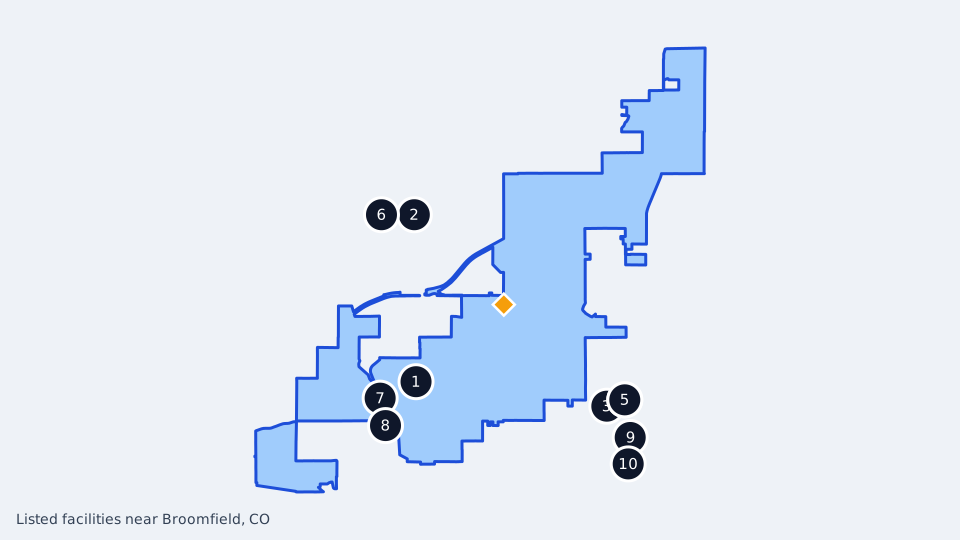
10 options near Broomfield, CO, nearest first. Compare services and locations, then call to check availability.
Call (833) 659-6966Ask about your optionsThis number connects to our central helpline, not directly to a listed facility.
Check which services are available for your needs.
Confirm payment options and any waiting time directly.
Ask what information the program needs from you.
When you first reach out to a program that provides addiction treatment, it helps to know what to ask so you can find the right fit. You can start by asking about the level of care they offer, such as outpatient counseling, intensive outpatient programs, or partial hospitalization. It is also reasonable to ask how they structure a typical day or a first appointment, including whether you will meet with a counselor, a clinician, or a care coordinator.
Many programs will want to learn about your history, your current situation, and your goals before recommending a specific track. You can ask about the length of the program, what kinds of therapy are available, and whether they offer support for family members. It is also fine to ask about practical matters like hours of operation, whether they offer evening or weekend appointments, and how you can get started.
Programs in and near Broomfield, including centers in Lafayette and Denver, may have different processes, so asking these questions directly can help you compare options and decide where to begin. Remember that you are not committing to anything just by asking questions; you are gathering information to make a thoughtful choice about your care.
Call (833) 659-6966
Not every drug rehab center offers the same type of care, so it helps to understand the common categories before calling. At the most intensive end is inpatient rehab, where housing, meals, and treatment all happen in one place. A step down from that is a day treatment or partial hospitalization program, which is nearly as many hours of care but lets you return home each night.
Intensive outpatient care offers several sessions a week with more flexibility, and standard outpatient services offer the lightest schedule. Some people also begin with a period of supervised withdrawal management before moving into ongoing treatment. When you call a program, ask which of these levels they actually provide, since many facilities focus on just one or two.
Call (833) 659-6966Check which services each program reports offering.
Consider travel distance and whether care is in person or remote.
Ask the program directly about payment and coverage.
Confirm how to contact the program and what to expect.
Before committing to any rehab program, ask the same core questions of each one so you can compare answers. Start with the basics: what levels of care they provide, whether they have immediate openings, and what the admission process involves. Ask about treatment methods, whether medication is part of their approach, and how they handle co-occurring mental health conditions.
Get specifics on cost, insurance participation, and possible additional charges. Ask about visitation, phone access, and family involvement if those matter to you. It is also fair to ask what their aftercare and relapse support look like once the formal program ends.
In Colorado, drug rehab centers typically accept a variety of private health insurance plans, so it is important to verify your specific policy’s coverage for substance use treatment directly with the provider. For those with limited income, the state’s Medicaid program may offer coverage for eligible residents, though eligibility must be confirmed through the Colorado Department of Health Care Policy and Financing. Many facilities also offer sliding-scale fees based on your ability to pay, and self-pay options are available for those who do not use insurance.
Always contact the rehab center directly to discuss your payment options and confirm what is accepted.
Start with the kinds of care relevant to your needs.
Check each program’s listed services, location and contact details.
Contact a program to confirm availability, costs and the next step.
When choosing between drug rehab centers near you, start with fit rather than convenience. Ask whether each program has experience treating the substance and pattern of use you are dealing with, since some centers specialize. Compare the intensity of care available and whether you can move between levels if your needs change.
Look at what a normal day involves: how much is group therapy, how much is individual counseling, and what other services are included. Ask about family involvement, relapse support, and what the program does to help you continue care after discharge. Get a clear answer on cost, insurance participation, and any extra charges.
A program that explains these details openly and gives you time to decide is showing you how it treats people.
When you first reach out to a program that provides addiction treatment, it helps to know what to ask so you can find the right fit.

Emergencies connected to drug use need fast action, so treat them as emergencies first and treatment questions second. Call 911 for any suspected overdose, severe withdrawal reaction, or situation where someone may harm themselves or others. Stay with the person until help arrives if it is safe to do so.
For non-medical crises, the 988 Suicide and Crisis Lifeline provides free, confidential support by phone or text, day or night. Once the person is safe and stable, you can take time to compare rehab centers and plan ongoing care.
If you or someone else is in immediate danger, call 911 now.
Call (833) 659-6966897 U.S. Highway 287, Unit 200, Broomfield, CO, 80020
Active
1455 Dixon Avenue, Lafayette, CO, 80026
Active
12207 North Pecos, Suite 200, Denver, CO, 80234
Active
12365 Huron Street, Suite 1600, Denver, CO, 80234
Active
12365 Huron Street, Suite 1800, Denver, CO, 80234
Active
1300 Plaza Court North, Suites 102, Lafayette, CO, 80026
Active
350 Interlocken Boulevard, Suite 100, Broomfield, CO, 80021
Active
9769 West 119th Drive, Suite 32, Broomfield, CO, 80021
Active
11658 Huron Street, Denver, CO, 80234
Active
11160 Huron Street, Suite 32, Denver, CO, 80234
Active
Contact us for more information.
Before your first appointment, it can help to have a list of any medications you currently take, a summary of your substance use history, and any questions you want to ask about treatment. You do not need to have everything figured out; the staff will guide you through the process. It is also okay to bring a notebook to write down information and to bring a trusted friend or family member for support if the program allows it. What matters most is that you are honest about your situation so they can recommend the right level of care for you.
The right level of care depends on your needs, which is something a program can help you assess during an initial call or visit. You can ask the program directly about what services they provide and what steps they recommend for someone starting treatment. They may ask you questions about your substance use, your living situation, and any mental health concerns to help determine whether outpatient care, intensive outpatient care, or a different setting is a good starting point. It is perfectly okay to contact several programs to compare how they respond and what they offer before making a decision.
Start with an honest picture of your situation: how often you use, whether you have tried to stop before, and what support you have at home. Then contact a few programs and ask for an assessment, which is how they match you to a level of care. You can also ask your primary care doctor for referrals. Comparing more than one program gives you a better sense of what fits.
Short programs may last about a month, longer residential stays often run two to three months, and outpatient treatment can continue for six months or more. The level of care matters too: inpatient programs are measured in weeks, while weekly counseling is measured in months. Progress is usually reviewed along the way rather than set in stone at admission. Ask programs how they handle extensions or step-downs if your needs change.
Cost depends on the level of care, the length of the program, and your insurance coverage, so the same program can cost two people very different amounts. The fastest way to a real number is to call with your insurance information in hand and ask for an estimate. Ask about charges beyond the base rate, such as medications, drug testing, or aftercare visits. Programs that will not give you a clear picture of costs before admission deserve extra scrutiny.
Last updated