 National Rehab Helpline

SaVida Health — 655 Main Street, Suite 2
0.7 mi, Bennington655 Main Street, Suite 2, Bennington, VT, 05201
Active
- Outpatient
- Medication-assisted treatment
- Medicaid
- Medicare
City
10 options near Bennington, VT, nearest first. Compare services and locations, then call to check availability.
This number connects to our central helpline, not directly to a listed facility.
When you contact a drug rehab center in Bennington, ask what happens during the first appointment. A typical intake includes a discussion of your substance use history, any medical or mental health concerns, and what you hope to get from treatment. The program may perform a basic health screening.
Ask whether the program offers individual or group therapy, medication-assisted treatment, or referrals for other services you may need. In Bennington, local facilities include SaVida Health, VA Bennington CBOC, BAART Programs, United Counseling Services, and The Brien Center. Call ahead to confirm which services are available, hours of operation, and whether the center accepts your insurance or offers sliding-scale fees.

When you compare drug rehab centers, one of the first things to look at is how much structure each program provides. Residential treatment means you stay on site full time, which removes you from daily triggers and gives round-the-clock support. Day programs, often called partial hospitalization, involve treatment most days of the week while you sleep at home.
Intensive outpatient programs usually meet three to five times per week and are often scheduled around work or school. Traditional outpatient counseling is the least intensive option and typically means one or two sessions a week. If you are unsure which fits your situation, asking a program directly about how they assess new clients is a practical first step.
A first call to a treatment center is your chance to gather information, so treat it like an interview. Useful questions include: What levels of care do you provide? How long is the program, and can it be extended?
Is medication for addiction treatment available? Do you treat anxiety, depression, or other mental health concerns at the same time? What does the daily schedule involve?
What is the full cost, and what does my insurance cover? Do you involve family, and what support is there after discharge? Programs should answer these plainly and let you take your time deciding.
In Vermont, the cost of drug rehab centers is commonly managed through private insurance policies, which often include partial or full coverage for addiction treatment services. Eligible residents may also access public health insurance like Medicaid, though eligibility and acceptance of specific programs should be verified with both the insurer and the rehab facility beforehand. To address financial barriers, several facilities offer sliding-scale fees based on income and allow self-pay options; for the most accurate information, it is best to contact the center directly to discuss payment options and confirm what they accept.
A useful way to narrow your options is to make a short checklist and ask every program the same questions. Compare the levels of care offered, since a center that only provides outpatient sessions may not be right if you need a residential setting. Look at program length and structure, including how many hours per week you would be in treatment.
Ask what therapies are used, whether medication is available if you want it, and how the program handles co-occurring mental health concerns. Confirm the total cost, what insurance covers, and whether there are fees beyond the stated rate. Distance matters too, especially if family visits or aftercare appointments are part of your plan.
Writing down the answers as you go makes the comparison much easier.
When you contact a drug rehab center in Bennington, ask what happens during the first appointment.

For any urgent medical situation, overdose, or crisis, calling 911 is the fastest way to get help, and it is safer to call and not need it than to wait. Emergency services can stabilize the person and take them to a hospital for evaluation. If the concern is a mental health or substance use crisis that is not a medical emergency, the 988 Suicide and Crisis Lifeline offers confidential support by call or text around the clock.
You do not need to be certain how serious things are before reaching out. After the crisis is addressed, a drug rehab center or treatment referral line can help with next steps.
If you or someone else is in immediate danger, call 911 now.
655 Main Street, Suite 2, Bennington, VT, 05201
Active
186 North Street, Bennington, VT, 05201
Active
120 Depot Street, Suite 4, Bennington, VT, 05201
Active
100 Ledge Hill Drive, Bennington, VT, 05201
Active
77 Hospital Avenue, Suite 107, North Adams, MA, 01247
Active
77 Hospital Avenue, Suite 104, North Adams, MA, 01247
Active
157 River Street, North Adams, MA, 01247
Active
124 American Legion Drive, North Adams, MA, 01247
Active
1274 Curran Highway, North Adams, MA, 01247
Active
5312 Main Street, Route 7-A, Manchester Center, VT, 05255
Active
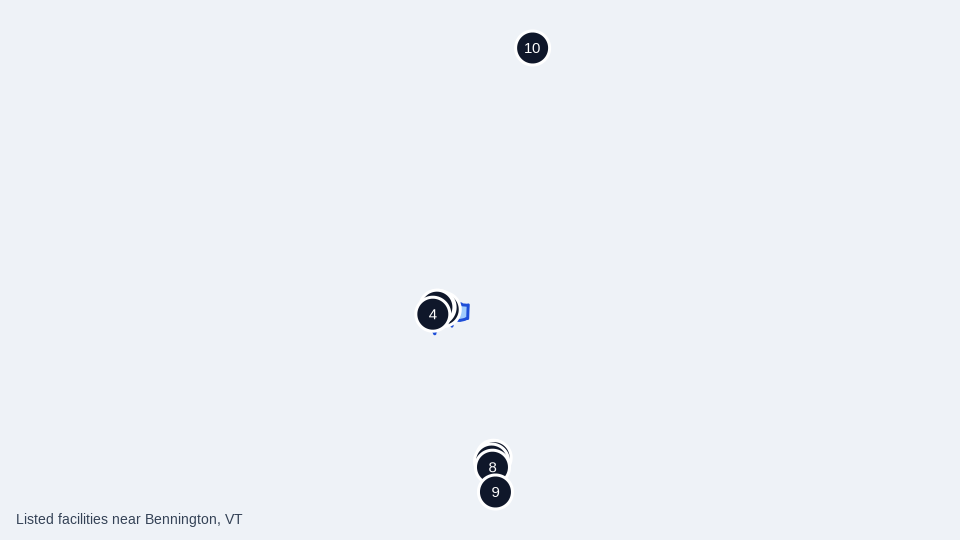
These lists use only what the 10 active facilities listed for Bennington report to SAMHSA's FindTreatment.gov. No facility pays to be included or can ask to be moved. Reporting more options is not a measure of quality, outcomes or suitability for any person. A missing option means the facility did not report it to the source, not that it is not offered. Call the facility to confirm everything before relying on it.
How this list is made: each facility scores one point for each of these 5 levels of care (settings) it reports to SAMHSA's FindTreatment.gov (Residential (24-hour); Outpatient; Intensive outpatient; Partial hospitalization / day treatment; Hospital inpatient). A facility needs at least 3 to appear. Facilities are shown from the highest count to the lowest; facilities with the same count are in alphabetical order, which has no other meaning. Up to 10 are shown.
How this list is made: each facility scores one point for each of these 7 payment and cost-assistance options it reports to SAMHSA's FindTreatment.gov (Medicaid; Medicare; Private health insurance; Military insurance (TRICARE); Cash or self-payment; Sliding fee scale; Payment assistance). A facility needs at least 4 to appear. Facilities are shown from the highest count to the lowest; facilities with the same count are in alphabetical order, which has no other meaning. Up to 10 are shown.
How this list is made: each facility scores one point for each of these 4 medications used in treatment it reports to SAMHSA's FindTreatment.gov (Buprenorphine; Methadone; Naltrexone; Medication for alcohol use disorder). A facility needs at least 2 to appear. Facilities are shown from the highest count to the lowest; facilities with the same count are in alphabetical order, which has no other meaning. Up to 10 are shown.
How this list is made: each facility scores one point for each of these 12 age groups and client groups accepted it reports to SAMHSA's FindTreatment.gov (Adolescents; Young adults; Adults; Seniors; Pregnant or postpartum women; Adult women; Adult men; Veterans; Active duty military; Criminal justice clients; Clients who have experienced trauma; Co-occurring mental and substance use disorders). A facility needs at least 5 to appear. Facilities are shown from the highest count to the lowest; facilities with the same count are in alphabetical order, which has no other meaning. Up to 10 are shown.
Start by calling a few centers to ask about the types of treatment they offer, such as outpatient counseling, medication-assisted treatment, or intensive outpatient programs. Ask whether they treat adults only or also serve adolescents, and whether they can help with co-occurring mental health conditions. Confirm what insurance they accept and whether they have a sliding-fee option.
Some centers accept walk-in or self-referrals, while others require a referral from a healthcare provider or a court order. Call the program directly to ask about their admission process and what paperwork you need to bring to the first appointment.
A good first move is writing down what you want help with, then calling two or three programs to compare what they offer. During the first call, ask what levels of care they provide, how long the program runs, and what it costs with your insurance. Take notes so you can compare the answers side by side. There is no obligation to enroll during that first conversation.
There is no single answer, because treatment length depends on your needs, the level of care, and how you respond. Residential programs often run from a few weeks to a few months, while outpatient care can stretch much longer with fewer hours per week. Many people continue with counseling or support groups after a formal program ends. A program that promises a guaranteed timeline for everyone is worth questioning.
Start by contacting your insurance company to ask what substance use treatment is covered and which programs are in network. Then confirm the details with the rehab center itself, since billing practices vary. Ask specifically about deductibles, co-pays, and anything that might not be covered, like certain medications or extra services. If you are uninsured, ask the program about sliding-scale fees, payment plans, or state-funded options.
Last updated